Jerk Rigs (Jerk Cords)
A cord, a bungee, an anchor and a few decoys - pull the line and your spread swims, feeds and ripples. The cheapest, most legal-everywhere motion in duck hunting.
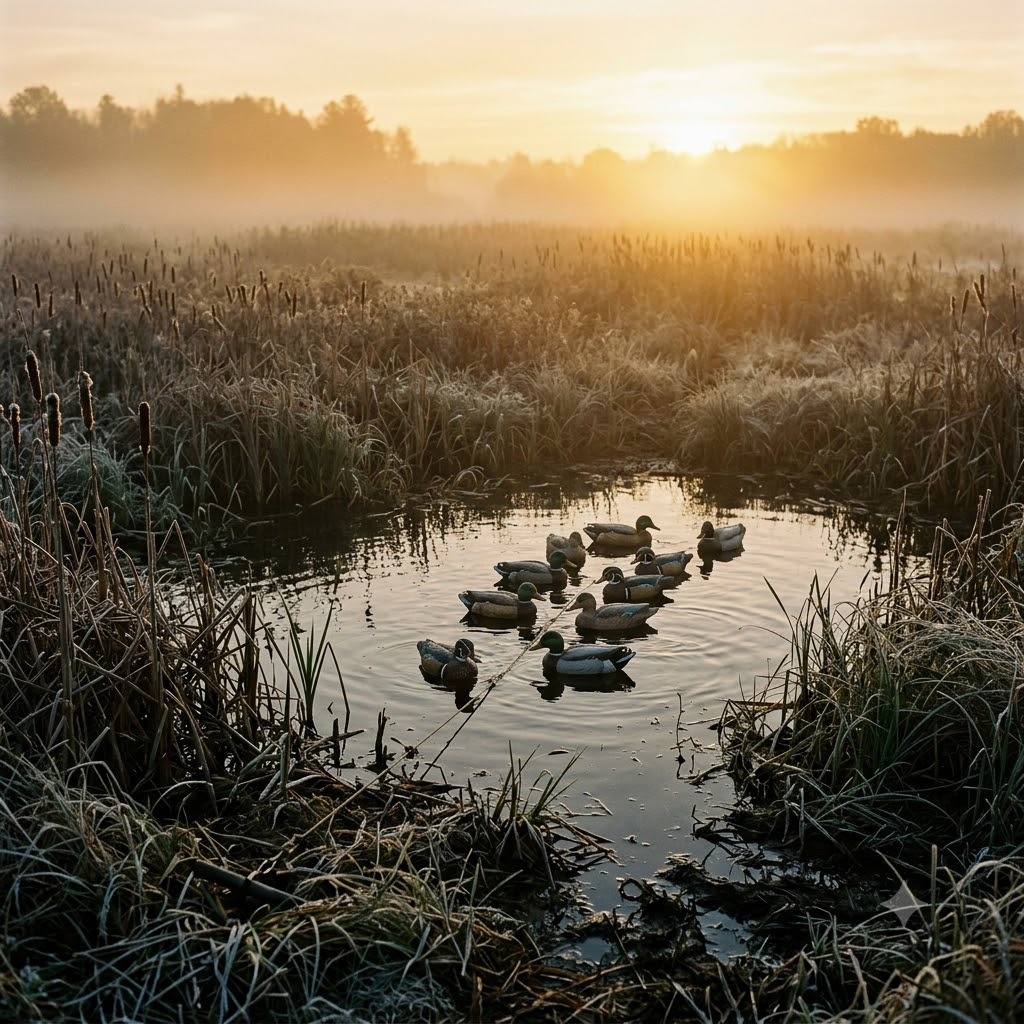
The deadliest motion device in duck hunting costs about as much as a box of shells: a jerk rig - anchor out past the landing hole, bungee section, cord running back to your hand, three or four floaters clipped along it. Pull, and decoys surge and bob; release, and the bungee glides them back while rings of ripple spread across the whole pocket. Dead-calm mornings that flare ducks off motionless plastic are exactly when the jerk cord kills - and it's hand-powered, so motorized-decoy restrictions don't apply (though rules always deserve a read).
What it is
A hand-operated motion line: heavy anchor (window weight, brick), 1-2 m of bungee, then 15-30 m of dark cord to the blind, with 2-5 decoys clipped via droppers along the final stretch. Commercial kits exist; buckets of hunters build their own.
When it wins
Calm days, first and always - glass-flat water is the jerk rig's stage. Also: finishing motion as birds work (when the spinner goes OFF, the jerk cord goes ON), small hidden holes, timber, and anywhere motors are restricted or educated birds have soured on spinners.
Rigging & setup
Set the anchor beyond and upwind of the landing pocket so the rippling decoys border the hole, run the cord to your hide low across the water (or bottom-weighted), clip swimming-posture decoys at 1-2 m spacing, and test the glide: a good rig swims decoys forward on the pull and drifts them back on the bungee, rings radiating the whole time.
Running it on the hunt
Work it like calling - rhythm, not spasm: a few tugs as birds swing wide (splash and flash of moving bodies), gentle pulses as they work, a soft tremble as they finish so ripple keeps the pocket alive without any single decoy lurching. Hands off entirely in the last seconds if birds are locked.
Numbers & placement
Three to five decoys on one cord animates a dozen-decoy pothole spread convincingly; big spreads run a rig per pocket or a Y-line working two clusters. Put the moving birds where finishing ducks stare - edging the landing hole - and let the static mass benefit from the spreading rings.
Common mistakes
Cord run slack and floating high where finishing birds see it (weight it, darken it, sink it), violent bass-hookset pulls that make decoys porpoise, anchoring IN the landing hole so swimmers block the runway, and leaving the rig home on a forecast-calm morning - the exact day it out-guns every motor in the trailer.
🧭 Brand-free guidance, not product recommendations. Decoy and motion-decoy rules vary by state and season (spinning-wing bans, e-caller rules, public-land specifics) - confirm current regulations with your official wildlife agency before you hunt. We don't give legal advice.