Floating Duck Decoys
Weighted-keel floaters are the foundation of every water spread - species, numbers, anchor rigs and the honest truth that a dozen good ones beat four dozen shabby ones.
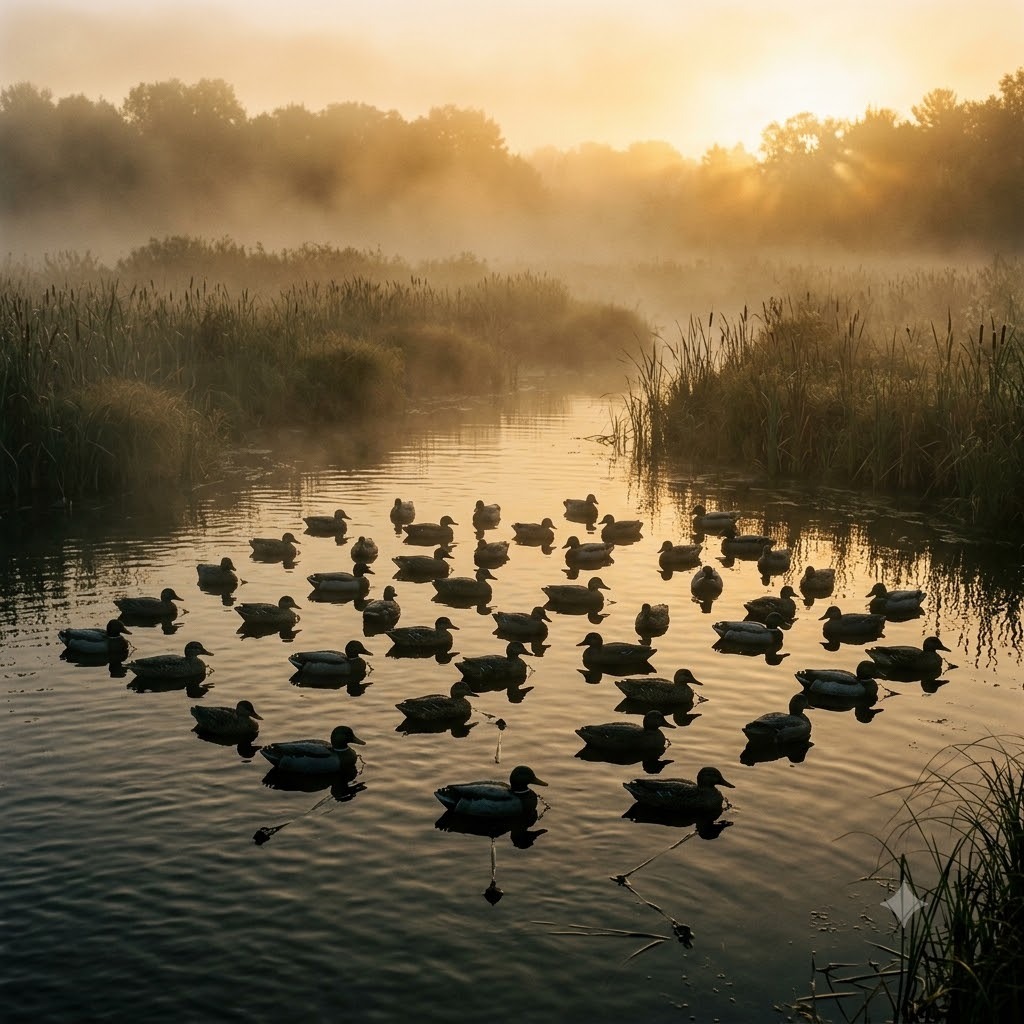
Every duck hunt over water is built on floaters: keeled plastic ducks riding their anchor lines, painted to sell the oldest lie in wildfowling - 'it's safe here, and the food's good.' The craft is in the details ducks actually read: posture mix, spacing, motion ripple and paint condition. A dozen clean, well-rigged floaters with natural spacing out-pull fifty faded hulks in a blob, and knowing why is most of duck hunting.
What it is
Hollow-bodied duck imitations with weighted keels (self-righting) rigged to anchor lines - mallards as the universal base, plus species matched to your water: teal early, gadwall and wigeon on ponds, divers on big water, black ducks where they rule.
When it wins
All water duck hunting, all season: potholes and timber holes (a dozen), rivers (current-tuned rigs), big open water (long lines by the dozen). The floater IS the water spread; everything else accessorizes it.
Rigging & setup
Line and anchor per water: 1-2 m Texas rigs with egg weights for shallow marsh (fast, tangle-free, carried on a carabiner), longer wraps with mushroom or strap weights for depth and wind, gang/long lines for divers. Keels matter - snap the line to the FRONT keel hole so decoys swim in current and wind.
Running it on the hunt
Set an open landing pocket upwind of the guns, mix feeder and upright postures, and get motion into the water: a jerk rig ripple, a spinner where it helps, even a boot wiggle - dead-calm plastic on glass is the classic flare cause. Adjust the hole as the wind shifts; ducks land INTO wind, into your pocket.
Numbers & placement
Small hidden waters: 6-18 sells fine. Field-adjacent big marsh: 2-6 dozen. Open-water divers: 5-10 dozen on lines. Shape matters less than the anatomy every shape shares: loose family clumps, one obvious open pocket in gun range, and the spread's density upwind of the hole.
Common mistakes
The evenly-spaced 'bowling pin' look (real ducks clump and gap), no motion on calm days, hunting over chipped, shiny-flashing paint (repaint or retire), landing-pocket set too far or downwind of the guns, and letting Texas-rig convenience talk you into water too deep for the rig - swimming decoys teach ducks to leave.
🧭 Brand-free guidance, not product recommendations. Decoy and motion-decoy rules vary by state and season (spinning-wing bans, e-caller rules, public-land specifics) - confirm current regulations with your official wildlife agency before you hunt. We don't give legal advice.