Diver Spreads & Long Lines
Divers decoy to shape: gang-rigged long lines with a tail funneling birds up the line into the pocket - big-water systems with real seamanship in the fine print.
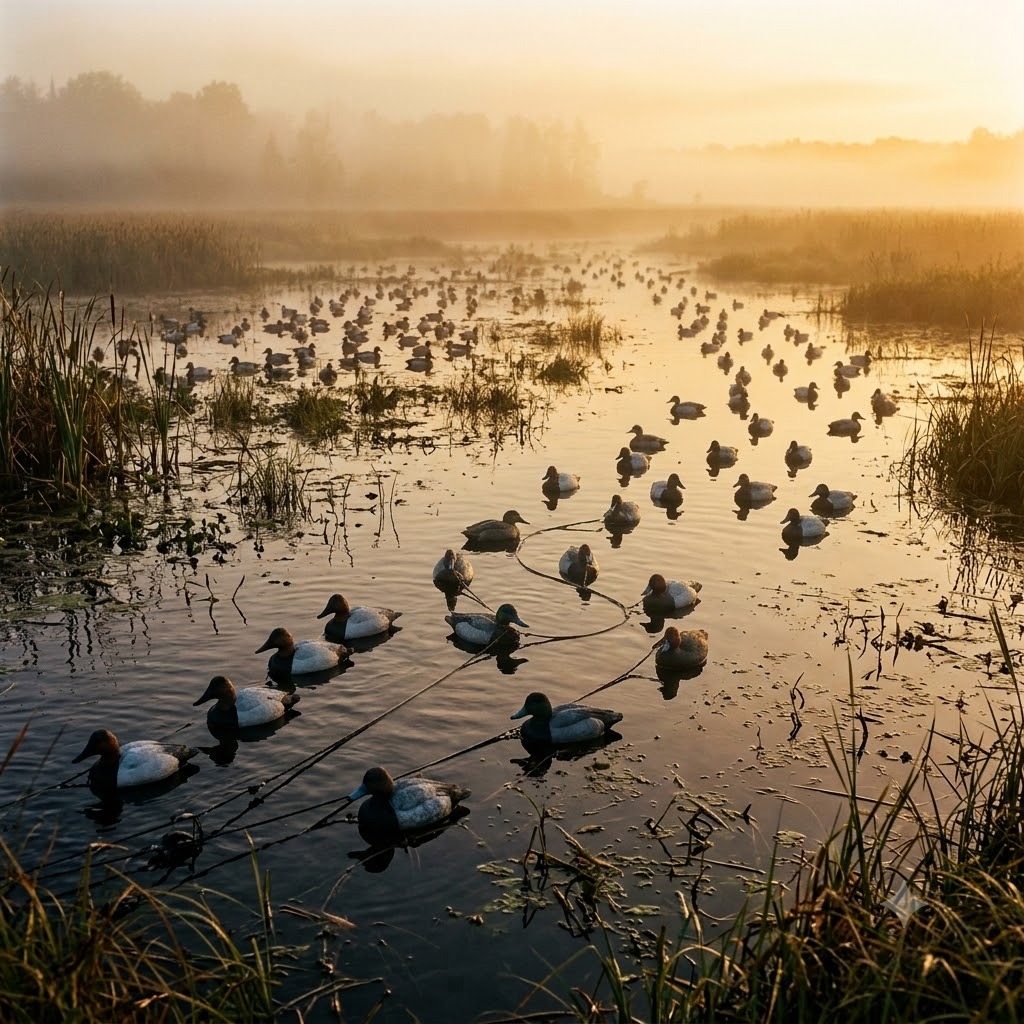
Diving ducks - bluebills, cans, redheads, buffleheads - don't work a spread like mallards; they come in low and fast, follow shapes, and land running up open lanes. Diver hunting answers with the long line: dozens of decoys gang-rigged on mother lines run from anchors, arranged so a 'tail' of decoys downwind funnels flying birds up the line into a pocket beside the boat or blind. It's the most systematized decoying in waterfowl - and it happens on big cold water, where the seamanship half (anchors, lines, layout boats, weather judgment) is as load-bearing as the decoys.
What it is
Gang-rigging: a heavy mother line anchored at both ends, with decoys clipped via short droppers at 1-2 m intervals - deployed and retrieved by the LINE, not the bird. Spreads combine several lines plus loose singles into shapes (J, fishhook, V) with a purpose-built landing lane.
When it wins
Open-water divers all season: bluebill raft edges, canvasback rivers, sea-duck coasts (with their own hardier rigging), and any hunt where 60+ decoys must deploy from a boat in minutes rather than hours.
Rigging & setup
Mother lines of tarred or coated cord with longline clips; anchors heavy enough for wind-driven water (5-10 kg at the upwind end); decoys clipped keel-first so they ride bow-into-wind. Deploy downwind-to-upwind along the planned shape, layout boat or blind at the pocket's head. Gloves, line tubs, and a tidy system - chaos on cold water is a safety issue, not just a mess. ⚠️ Big-water rules apply: life jackets worn, weather window respected, loads within the boat's honest limits.
Running it on the hunt
Divers follow the tail: birds strike the downwind end of the long line and fly UP it - the tail is your traffic director, the pocket beside the guns is the destination. Landing birds plane in low; shots come fast and going-away. Re-tension lines as wind builds; a dragging anchor slowly folds your shape into a blob.
Numbers & placement
Volume country: 5-12 dozen is a working spread, more never hurts on rafted bluebills. Classic shapes - the J (long tail curling to a pocket), fishhook, or twin lines forming a lane - all encode one rule: a downwind tail to intercept, a funnel to steer, and the pocket at gun range beside the hide.
Common mistakes
Puddle-duck spacing (divers want tighter lines and open LANES, not scattered blobs), light anchors surrendering the shape to the wind by 9 am, clipping decoys mid-keel so they sail sideways, tail set too short to intercept crossing flights, and treating November big water casually - diver hunting's real risk management is marine, and it outranks every decoy decision on this page.
🧭 Brand-free guidance, not product recommendations. Decoy and motion-decoy rules vary by state and season (spinning-wing bans, e-caller rules, public-land specifics) - confirm current regulations with your official wildlife agency before you hunt. We don't give legal advice.