Antelope Decoy
On open prairie with no cover, a buck-shaped silhouette lets you become the intruder a rutting pronghorn buck has to confront - the decoy is both stalk and provocation.
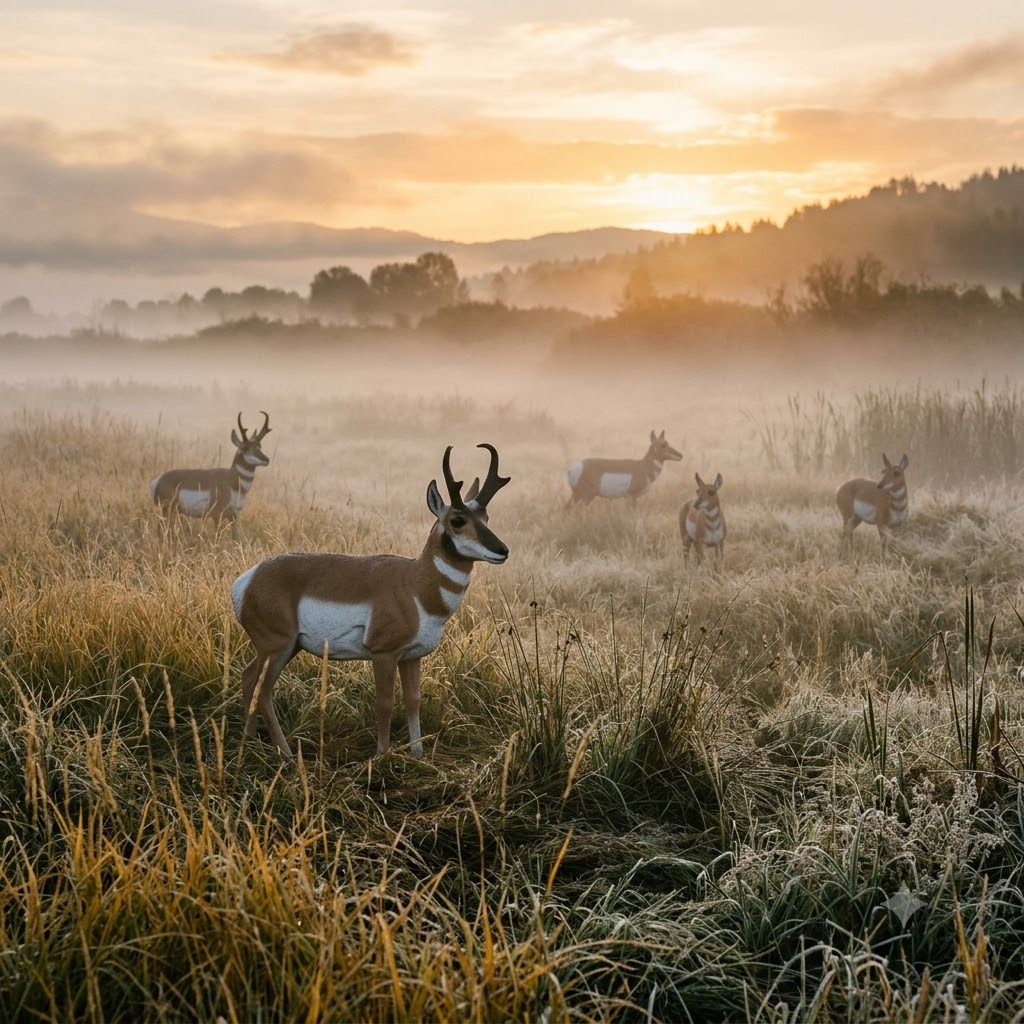
Pronghorn live on ground so open that a normal stalk is nearly hopeless, and their eyesight is the best of any North American game. The antelope decoy solves both problems at once during the rut: a buck decoy provokes a territorial herd buck into charging or challenging, and the same silhouette screens the hunter's approach across bare prairie. It is a specialist's tool for a specialist's animal and a narrow window.
What it is
A collapsible, packable two-dimensional decoy - usually a printed buck silhouette on a light frame with a handle or bow-mounted setup, sometimes a doe. The buck decoy is the aggressor's tool for the rut; a doe can pull a rutting buck looking for company. Light weight and a fast collapse matter because the hunter carries and maneuvers it constantly.
When it wins
The peak rut (typically September) when a herd buck is defending does and intolerant of rivals, wide-open terrain where a stalk has no chance, and situations where a buck can be shown a challenger from a distance he will answer. Outside the rut, when bucks are not territorial, the provocation angle fades and the decoy becomes mostly a stalking screen.
Setting it up
Get within sight of a rutting buck and his does, then present the buck decoy where he can see it - often from a distance, letting him decide to close. Keep low behind it and use the terrain's subtle folds. For archery, a bow-mounted or handheld decoy lets you shoot from behind the silhouette as the buck comes to fight. Always know where the does are, because the buck goes where they go. And treat this as an archery-only tactic: hiding behind a buck-shaped silhouette during a firearm season is dangerous, since another hunter glassing from a distance can mistake the decoy for a live buck - check your state's decoy regulations too.
Hunting from it
Show the decoy, then read the buck: a rutting animal may charge hard and fast, so be ready to shoot quickly and at changing range. Antelope close ground at a sprint. If a buck circles or hangs, patience and small repositions beat forcing it. On the open plains the wind is less of a scent problem than usual, but the animal's eyes never miss motion, so movement must be slow and deliberate behind the screen.
Comfort & concealment
Favor a light, quick-deploying decoy you can hold up for long stretches. Keep your body fully behind the silhouette and your movements minimal - a pronghorn will pick out a hand or a face beside the decoy from astonishing distance. Neutral clothing that matches sage and grass helps the moment the buck breaks the decoy's outline.
Common mistakes
Using the decoy outside the rut when bucks are not territorial, exposing hands, feet or face beside the silhouette, misjudging how fast a charging buck closes and getting caught unready, and losing track of the does - a buck will abandon the fanciest decoy the instant his does drift away.
🧭 Brand-free guidance, not product recommendations. Decoy and motion-decoy rules vary by state and season (spinning-wing bans, e-caller rules, public-land specifics) - confirm current regulations with your official wildlife agency before you hunt. We don't give legal advice.