.17 HMR
The .17 HMR doubles the .22's practical reach - a tiny 17-grain bullet at 2,550 fps that shoots laser-flat to 150 yards on prairie dogs, ground squirrels and crows.
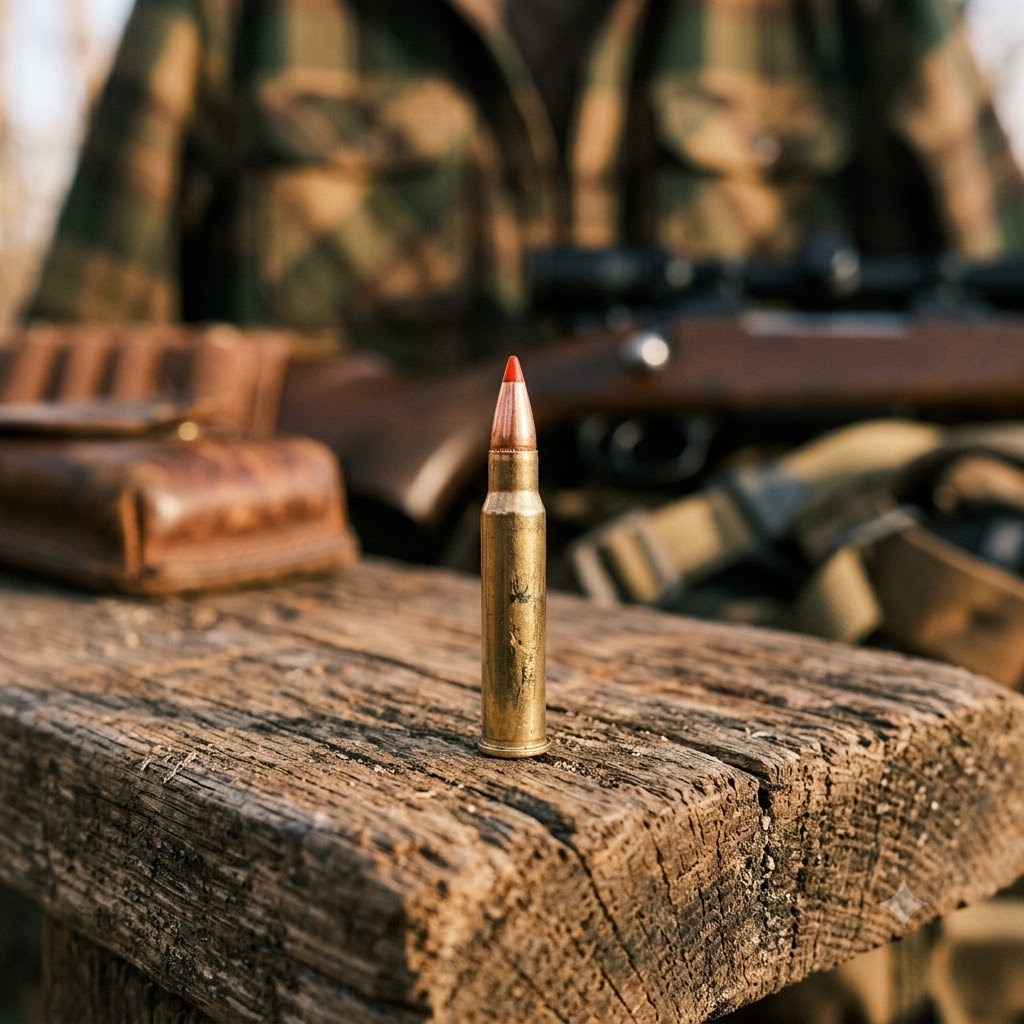
Where the .22 LR arcs, the .17 HMR draws a straight line - Hornady's 2002 magnum rimfire pushes a 17-grain V-Max at 2,550 fps, flattening trajectory to the point that varminting to 150 yards becomes point-and-press. It's the precision rimfire for open-country small targets, with the caveat that wind owns any 17-grain bullet eventually.
What it is
A .22 WMR case necked to .17 caliber - the fastest common rimfire, built for flat, precise varmint work.
What it hunts best
Prairie dogs, ground squirrels, crows and pests to 150 yards; fine for rabbits with head shots (the frangible bullet is dramatic on meat). Not a fur-friendly or big-game round.
Trajectory & energy
Zeroed at 100, it's ~2.6" low at 150 - functionally flat for rimfire work. Energy is modest (245 ft-lb muzzle) and sheds fast; it's a precision tool, not a hammer.
Recoil & shootability
None - pure crosshair discipline. The crack is sharper than a .22; the wind drift is the real skill ceiling: 10 mph pushes it ~4" at 150.
Rifles & ammo on the shelf
Good bolt guns abound (CZ, Savage, Ruger); ammo costs several times .22 LR but stays affordable. 17 and 20-grain loadings cover the use cases.
Bottom line
The upgrade when your .22 keeps arriving short on open-country varmints - flat, precise, addictive. Keep the .22 for the woodlot; carry this on the prairie.
⚠️ Caliber legality varies: many states set minimum calibers, straight-wall rules, or season-specific restrictions for big game, and they change. Always confirm the current regulations for your state, species and season with the official wildlife agency - this page is general guidance, not legal advice. Ballistics figures are typical factory-load approximations; your rifle and load will differ - verify at the range.