Mechanical (Expandable) Broadheads
Blades folded in flight that deploy on impact - mechanicals fly like field points and cut devastating wide channels, with energy costs and failure modes worth understanding honestly.
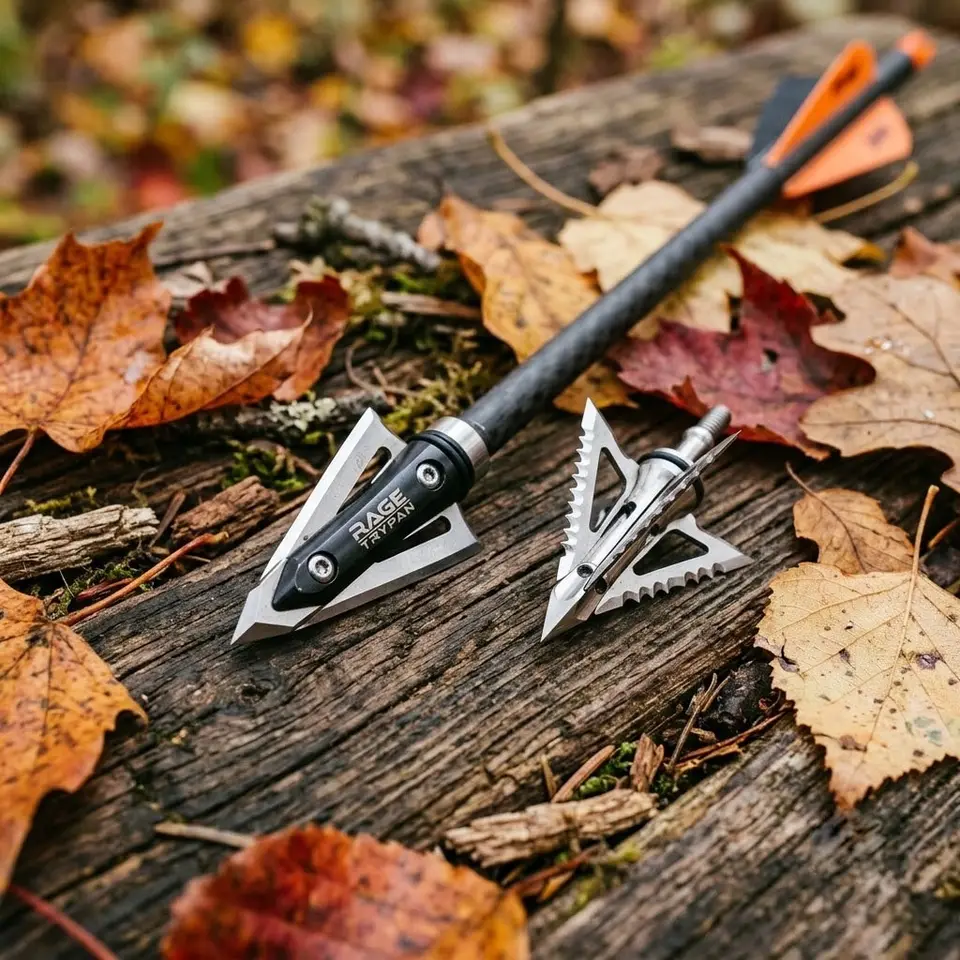
The mechanical broadhead makes a straightforward deal: blades tucked aerodynamically in flight (so it flies nearly identical to your practice points, wind be damned), deploying on impact to cut channels up to 2+ inches wide. Blood trails from big mechanicals are famously short. The fine print matters though - deployment costs kinetic energy, extreme quartering angles and heavy bone are its hard mode, and low-poundage setups may not have the energy budget to spend.
What it is
A head whose blades pivot open on impact - rear-deploying designs dominate - held closed in flight by collars, bands or clips. Cut diameters from 1.5 to over 2 inches.
How it works
The compact in-flight profile minimizes steering and wind drift; on contact, blades cam rearward and open, converting a field-point-like arrow into a wide cutting head through the hide.
Strengths
Practice-point flight from hard-tuned OR imperfectly-tuned bows, forgiving in wind at range, and wound channels that produce the shortest, most readable blood trails in archery.
Trade-offs
Deployment eats energy (penetration suffers on the margins), rubber bands and collars are consumables with failure modes, steep quartering shots can deflect or open early, and light setups (youth, low-poundage, short draws) may lack the energy the wide cut spends. Many experienced hands run mechanicals ONLY above a personal energy threshold.
Tuning & practice
Most ship with practice heads matching flight - verify anyway at your real distances. Replace bands/collars per the maker's schedule, check blade retention before every hunt, and confirm your setup's energy fits the head's appetite (heavier arrows help).
Mistakes with these heads
Pairing a 2-inch head with a low-energy setup, never replacing retention bands (blades rattling open in the quiver), taking the steep quartering-away shot the design least loves, and skipping verification because 'they fly like field points' - trust, then verify.
Brand-free guidance, not product recommendations - we explain what matters so you can choose for yourself. Always verify your setup's flight with the actual hunting heads before the season, and follow your state's equipment regulations (minimum draw weights, broadhead rules and lighted-nock legality vary).
Arrow-building gear
Links go to Amazon or a partner store (such as OpticsPlanet) and may earn us a commission at no extra cost to you. As an Amazon Associate we earn from qualifying purchases. We link gear types, not sponsors' picks: you choose the exact product.