Fletching & Vanes
The steering at the back of the arrow: vanes or feathers, size and helical turn decide how fast a broadhead stabilizes and how forgiving the whole setup flies.
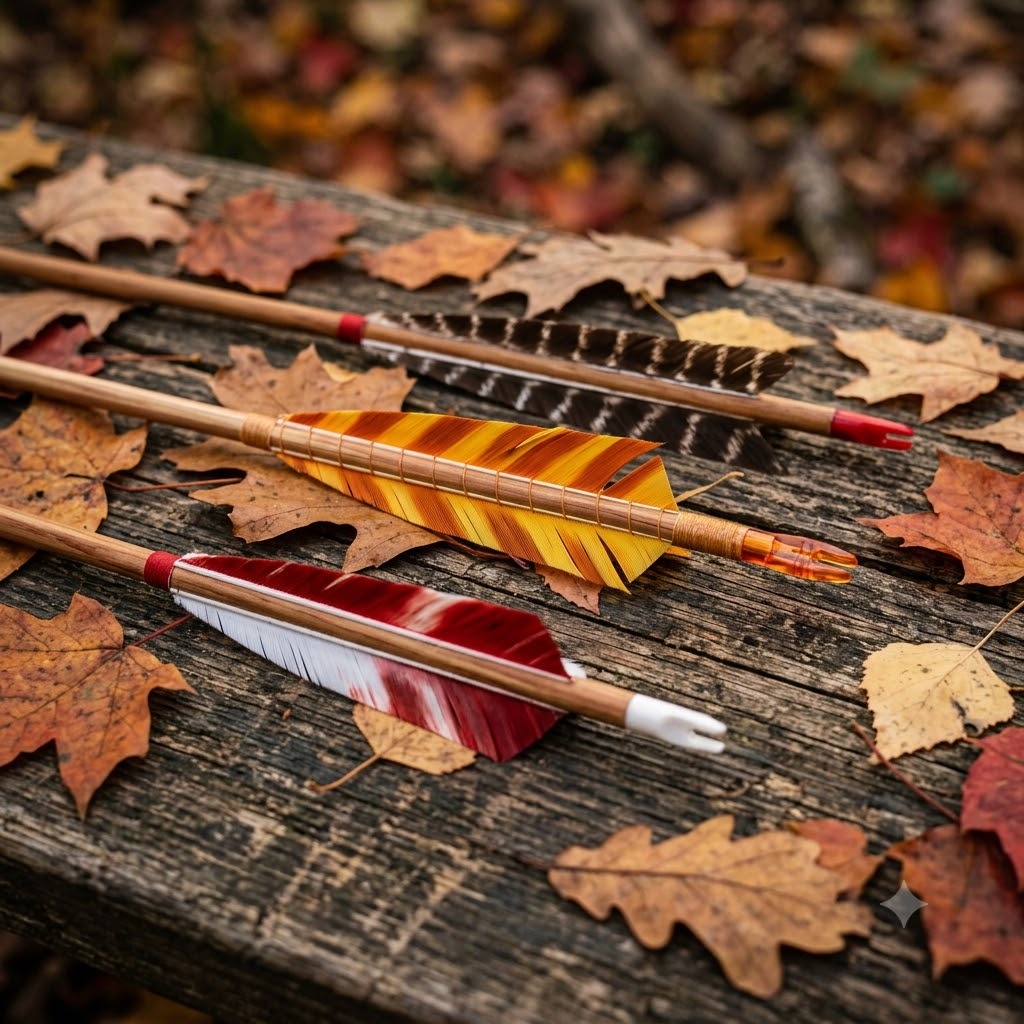
Fletching is the arrow's rudder - the vanes or feathers at the rear that catch air and steer the shaft straight. Get it right and a broadhead recovers fast and groups with your field points; get it wrong and even a perfectly-spined arrow planes and wanders. The choices are few but they matter: material, length, profile and how much the fletching is turned around the shaft to spin the arrow in flight.
What it is
The three (sometimes four) steering surfaces glued to the back of the shaft: plastic vanes in various lengths and heights, or natural feathers. They are set straight, offset (angled) or helical (curved around the shaft), and each fletch attempts to spin and stabilize the arrow so the point end leads cleanly.
How it works
As the arrow flies, air pushes on the fletching and forces the rear to trail behind the point, correcting yaw. Offset and helical fletching also spin the arrow, which averages out small imperfections and stabilizes the larger steering load of a broadhead. Bigger vanes and more turn add drag and stabilizing force; smaller, straighter vanes reduce drag but steer less.
Strengths
Larger, helical fletching stabilizes fixed-blade broadheads quickly and forgives minor tuning flaws, which is why big-blade setups often run tall helical vanes or feathers. Feathers are light and grip air aggressively for fast recovery. Shorter, lower-profile vanes give flatter, faster, wind-cheating flight that suits mechanical heads and long shots.
Trade-offs
More fletching and more helical turn mean more drag - slower arrows and more wind drift downrange - while too little steering lets a broadhead plane away from field-point impact. Feathers steer well but soak up rain and wear faster; stiff plastic vanes shed water but need more offset to match feathers' grip. Every gain in one direction costs a little in the other.
Tuning & practice
Match fletching to the head: bigger helical vanes or feathers for fixed blades, smaller/lower-profile vanes for mechanicals and speed. Shoot broadheads and field points together and adjust fletching (more turn, taller vane) if broadheads plane off. Keep clearance in mind for arrow rests, index the cock vane consistently, and re-fletch worn or torn vanes rather than hunting on them.
Common mistakes
Running tiny low-profile vanes on big fixed-blade heads and fighting planing, ignoring helical turn entirely so arrows never spin-stabilize, mixing fletching styles across a quiver so arrows group differently, and hunting on crushed or peeling vanes that steer inconsistently shot to shot.
🧭 Brand-free guidance, not product recommendations - we explain what matters so you can choose for yourself. Always verify your setup's flight with the actual hunting heads before the season, and follow your state's equipment regulations (minimum draw weights, broadhead rules and lighted-nock legality vary).