Fixed-Blade Broadheads
Blades rigidly fixed to the ferrule - nothing to deploy, nothing to fail. Fixed heads trade a little forgiveness in flight for absolute mechanical reliability on impact.
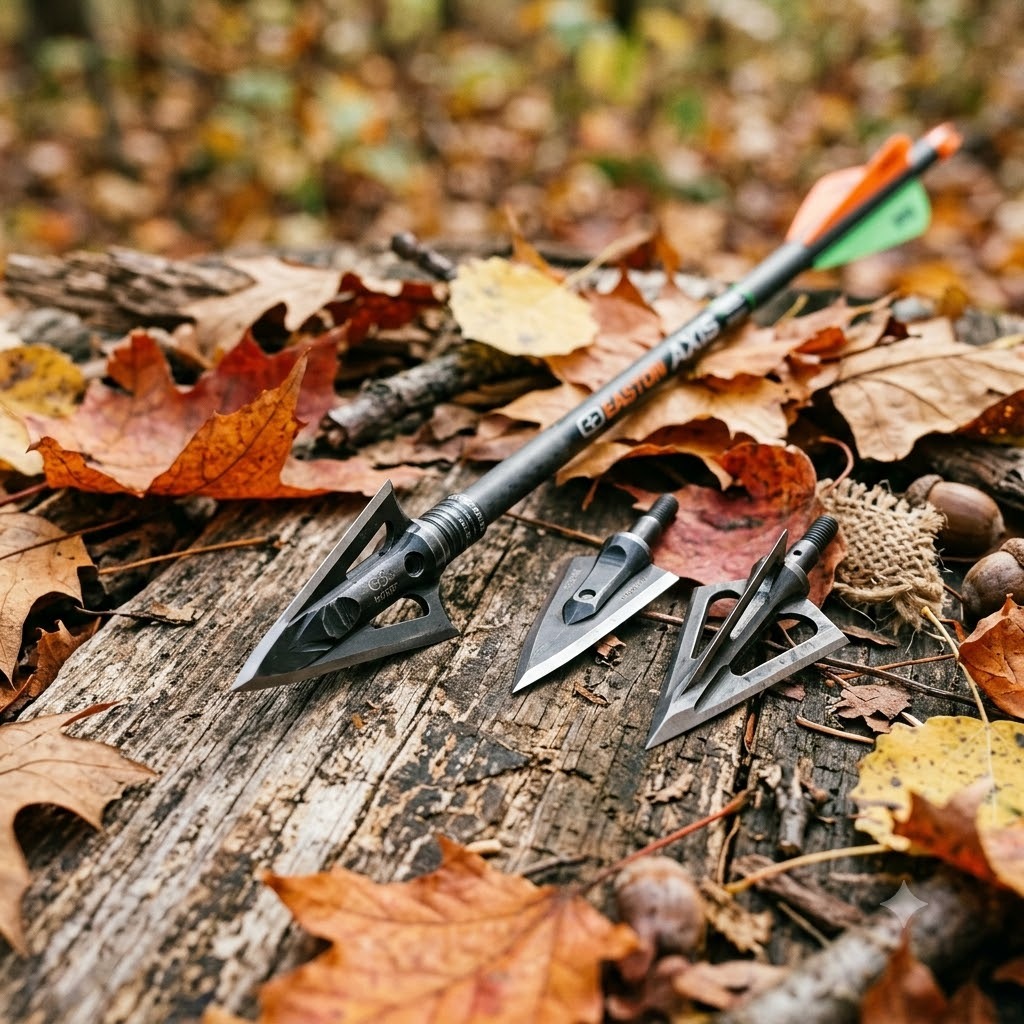
The fixed-blade broadhead is archery's hammer: two, three or four blades locked rigid to the ferrule, sharp from quiver to hide, with no mechanism between you and penetration. It cannot fail to open because it is never closed - which is why traditional shooters, low-poundage setups and every 'when it absolutely must work' philosophy still land here. The cost: those exposed blades steer, so a fixed head tells the truth about your bow's tune whether you want to hear it or not.
What it is
A one-piece or replaceable-blade head with blades permanently exposed, in cut widths typically 1 to 1 1/4 inch, flying exactly as well as your arrow flies straight.
How it works
All energy goes to cutting from the instant of contact - no deployment, no lost momentum. Deep penetration per unit of energy is the fixed head's physics; complete pass-throughs are its calling card.
Strengths
Total reliability (nothing moves), best-in-class penetration on heavy bone and quartering angles, works at ANY draw weight (crossbows to trad bows to youth rigs), and blades you can strop shaving-sharp again.
Trade-offs
Exposed blades plane in wind and amplify tuning flaws - a poorly tuned bow groups fixed heads away from field points; wider cuts magnify it. Slightly narrower wound channels than big mechanicals.
Tuning & practice
Non-negotiable: broadhead-tune your bow (walk-back or paper tune until fixed heads and field points group together), then practice with THE actual heads you'll hunt (re-sharpened or fresh blades after). Spin-test every assembled arrow.
Common mistakes
Hunting with heads you've never shot, assuming field-point zero transfers (it often doesn't), dull 'straight from the pack a year later' blades, and blaming the head for what is really a tuning or form problem.
🧭 Brand-free guidance, not product recommendations - we explain what matters so you can choose for yourself. Always verify your setup's flight with the actual hunting heads before the season, and follow your state's equipment regulations (minimum draw weights, broadhead rules and lighted-nock legality vary).