Broadhead Sharpening
A broadhead kills by cutting, and a cutting edge only works if it is truly sharp - maintaining that edge is a core skill for fixed-blade shooters and a serious cut hazard.
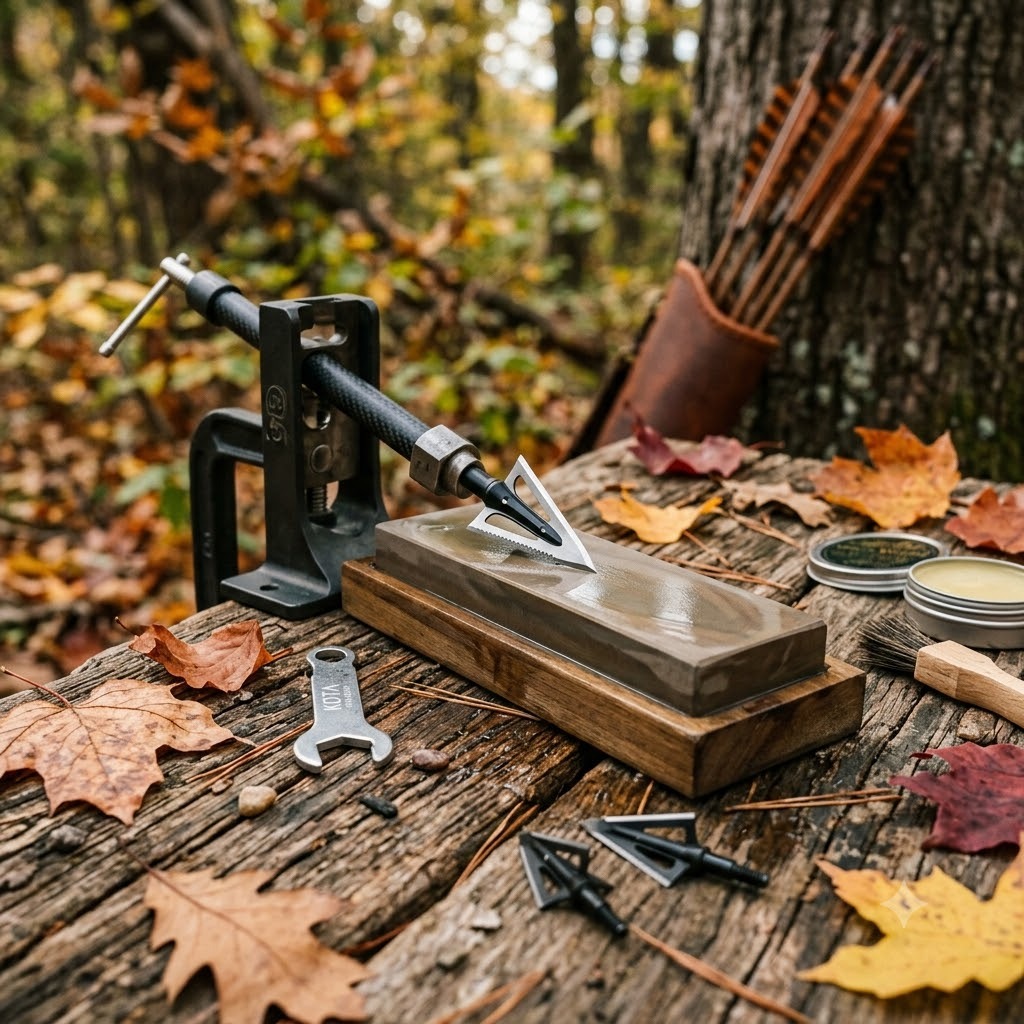
⚠️ These are extremely sharp cutting tools. Broadhead blades are designed to slice flesh with almost no pressure, and sharpening makes them sharper still. Work slowly, keep fingers behind the edge, use a guard or edge-holder where the blade design allows, and follow the maker's instructions for your specific head. This page explains the general idea; it is not a substitute for the manufacturer's guidance or hands-on instruction.
A broadhead does its work by cutting, and a dull or nicked edge tears and pushes tissue instead of slicing it, costing penetration and clean, quick results. Fixed-blade heads are meant to be maintained and re-sharpened; most mechanical and replaceable-blade heads are meant to have blades swapped, not honed. Knowing which is which - and keeping a truly shaving-sharp edge on the ones you sharpen - is basic broadhead care.
What it is
The upkeep of a broadhead's cutting edges: touching up or restoring the primary bevel on fixed-blade and single-bevel heads with files, stones or purpose-made broadhead sharpeners, versus simply replacing the pre-sharpened inserts on mechanical and replaceable-blade heads. The goal is a burr-free, shaving edge that matches the blade's original bevel angle.
How it works
Sharpening removes tiny amounts of metal along the bevel to reform a clean, aligned edge, then removes the resulting burr so the edge is crisp rather than folded over. Single-bevel heads are sharpened on one side only to keep their asymmetric grind; double-bevel heads are worked evenly on both. Consistency of angle across strokes is what produces a uniform, sharp edge.
Strengths
A properly maintained fixed-blade head can be brought back to shaving sharp again and again, saving money and giving a dependable edge if you build the skill. Sharpening also lets you confirm by hand that each blade is genuinely sharp before a hunt, rather than trusting a factory edge you never checked.
Trade-offs
It takes practice and patience to hold a consistent bevel, and a poorly-sharpened edge can be worse than a factory one. It is a real cut hazard every time. Replaceable-blade and mechanical heads mostly are not designed to be re-honed, so for those the "maintenance" is buying fresh blades, not sharpening old ones.
Tuning & practice
Match the method to the head: files and stones or a broadhead-specific sharpener for fixed blades, one-sided work for single-bevel grinds, fresh inserts for replaceable systems. Keep the maker's bevel angle, work to a burr-free shaving edge, and test on paper or hair rather than a thumb. Above all follow the head maker's directions and handle every blade as the serious cutting tool it is.
Common mistakes
Trying to hone replaceable or mechanical blades that were meant to be swapped, changing the bevel angle and rounding the edge, leaving a burr so the blade feels sharp but folds on contact, and rushing the work - the fastest way to a deep cut is a careless pass across a broadhead.
🧭 Brand-free guidance, not product recommendations - we explain what matters so you can choose for yourself. Always verify your setup's flight with the actual hunting heads before the season, and follow your state's equipment regulations (minimum draw weights, broadhead rules and lighted-nock legality vary).