Arrow Components & FOC
Inserts, fletching, nocks, wraps - and FOC, the balance number the heavy-arrow world argues about: how the parts of an arrow build add up to flight.
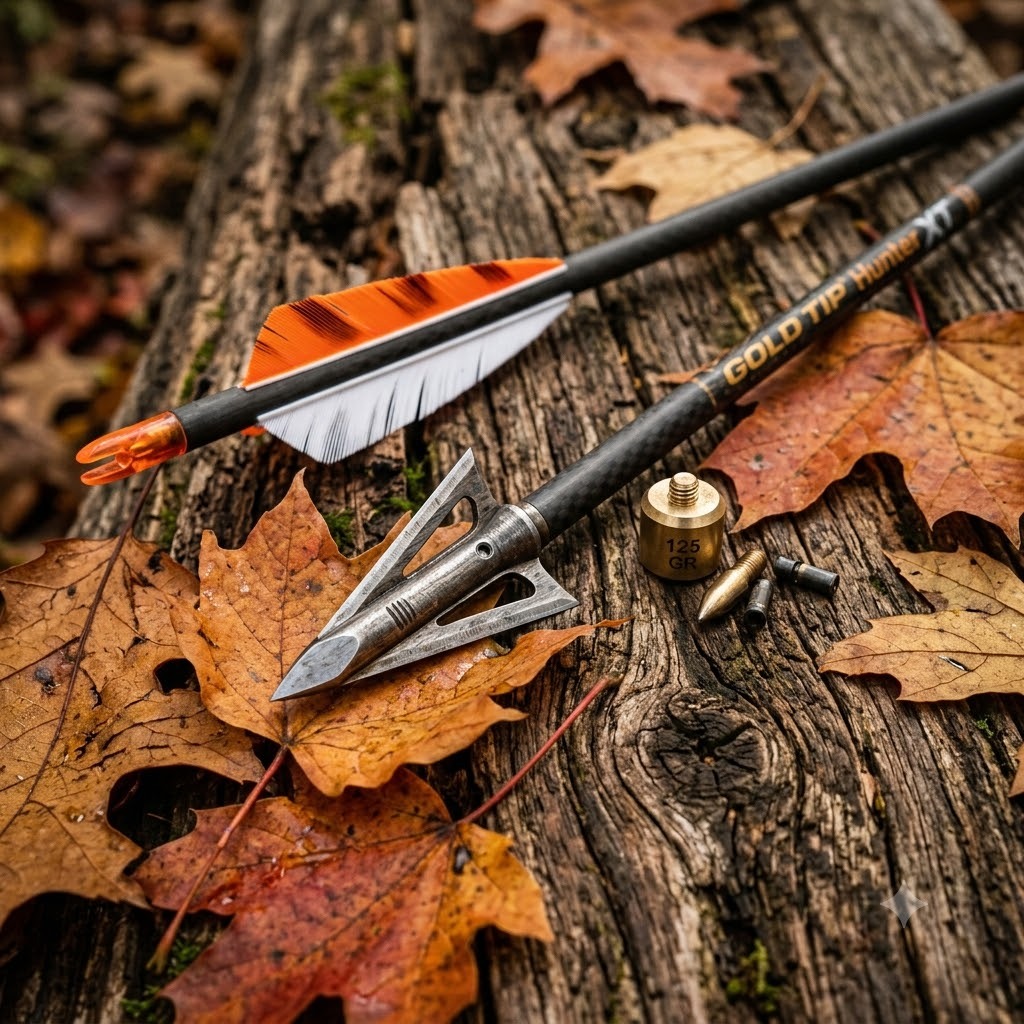
A finished hunting arrow is a small engineering project: an insert (steel or aluminum, standard or weighted) accepting the head, fletching (plastic vanes or feathers, straight/offset/helical) steering the rear, a nock indexing it to the string, maybe a wrap for visibility - and the whole assembly's balance point expressed as FOC (front of center). Get the parts right and the arrow is tuned before it's ever shot; and FOC, the percentage the balance sits ahead of center, is the number the penetration-focused school builds entire philosophies around.
What it is
The component stack: inserts/outserts (the threaded socket - 10 to 100+ grains), vanes or feathers in various profiles and turns, nocks (fit matters: snap, not grip), wraps and lighted nocks (legal most places - verify yours). FOC = how far forward of the shaft's midpoint the finished arrow balances, as a percent.
How it works
Front weight (head + insert) pulls FOC up; rear additions (wraps, big vanes) pull it down. Helical fletch spins the arrow for stability - more turn stabilizes broadheads at a small speed cost. Standard builds land 10-12% FOC; the heavy/high-FOC school targets 15-20%+ chasing penetration and wind-bucking.
Strengths
Component tinkering is cheap tuning: 20 extra grains up front can fix weak-spine symptoms, more helical can settle a fussy fixed head, a lighted nock shows exactly where the arrow went at dusk. High-FOC heavy builds genuinely penetrate better - momentum arithmetic works.
Trade-offs
Every choice is a trade: front weight = trajectory drop; big helical = speed loss and clearance to check; heavy builds trade wound-channel speed for depth. And FOC is one variable, not a religion - a perfectly tuned 11% arrow beats a wobbly 18% one every day of the week.
Tuning & practice
Build in matched sets (weigh components, not just shafts), re-tune after any front-weight change (effective spine shifted), check vane clearance on your specific rest, and verify FOC by simple balance-point measurement: FOC% = 100 × (balance point distance from center) ÷ arrow length.
Common mistakes
Adding a 75-grain insert to a spine-borderline shaft and inventing new problems, gluing inserts with the wrong adhesive (spinning inserts strip on head removal), copying a heavy-arrow influencer build without the draw weight behind it, and forgetting that the deer never asks your FOC - shot placement still signs the tag.
🧭 Brand-free guidance, not product recommendations - we explain what matters so you can choose for yourself. Always verify your setup's flight with the actual hunting heads before the season, and follow your state's equipment regulations (minimum draw weights, broadhead rules and lighted-nock legality vary).