Reverse-Draw Crossbow
Limbs mounted backwards move the weight over your trigger hand and stretch the power stroke - the narrowest, best-balanced and often quietest crossbows, at a premium price.
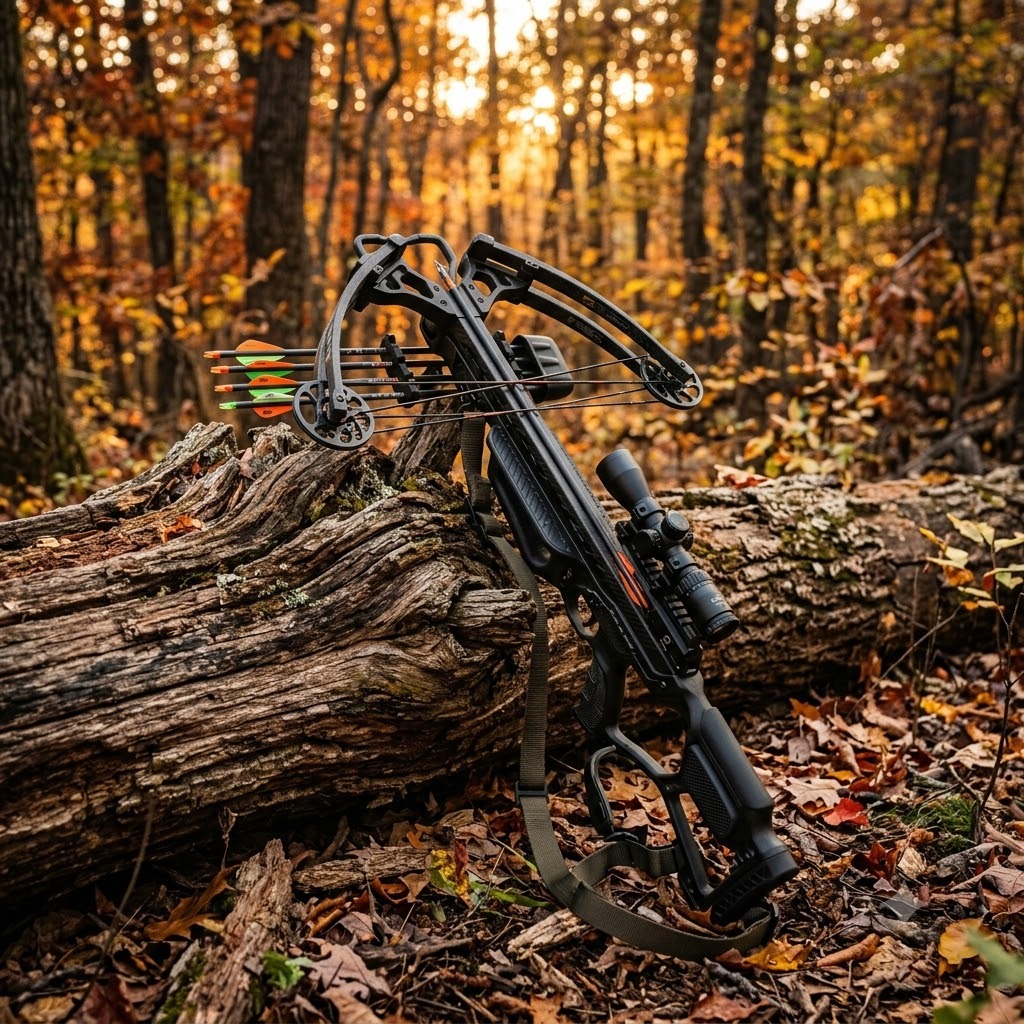
Flip the limbs around so they point toward the shooter and two good things happen: the riser moves toward the middle of the stock (so the crossbow balances over your hand instead of nose-diving), and the string starts further forward (so the power stroke gets longer, making speed with less draw weight). That's the reverse-draw idea. These are typically the narrowest, most offhand-shootable and quietest crossbows made - and usually the most expensive, with the most specialised service needs.
⚠️ Crossbow safety and legality. Crossbow rules differ from vertical-bow rules and vary sharply by state and season - some allow them all archery season, some only in firearms seasons or with a disability permit - so confirm current regulations with your wildlife agency; we don't give legal advice. Keep fingers and thumb BELOW the rail at all times (the string will take them off), never dry-fire, follow the maker's minimum bolt weight, de-cock only by the maker's approved method, and never climb into a stand with a cocked, loaded crossbow. Brand-free educational guidance, not a substitute for hands-on instruction.
What it is
A crossbow whose limbs are mounted reversed (pointing back toward the shooter), moving the balance point rearward and lengthening the power stroke for speed at lower draw weights.
How it shoots
Noticeably steadier offhand - the weight sits over your trigger hand, not out at the muzzle - with a long, smooth power stroke that delivers speed at moderate poundage and, on many models, a quieter shot.
Who it suits
Hunters who shoot offhand or from cramped blinds, anyone sensitive to a nose-heavy carry, and those willing to pay a premium for the most refined crossbow ergonomics.
Choosing one
Expect a higher price and shop-dependent service; judge balance in your hands, cocking system (most pair with cranks), width at rest, and the maker's de-cock method. The ergonomics are the product - handle before buying.
Setup & practice
As with any crossbow: zero with hunting bolts, verify broadheads, respect the minimum bolt weight, and learn the crank/de-cock routine cold. The steadier balance rewards practicing real field positions.
Common mistakes
Assuming exotic geometry changes the rules (it doesn't - same rail, same fingers-down discipline), skipping service intervals on a complex cam system, and paying for refinement you won't notice from a rest.
🏹 Brand-free guidance, not product recommendations. Bows must meet your state's minimum draw weight and archery rules, which vary and change - confirm with your wildlife agency before hunting. Never dry-fire a bow, match arrow spine to your setup, and get a pro-shop fitting. We don't give legal advice.