Crossbow Bolts & Heads
Bolts are not arrows: length, weight and - critically - nock type must match your crossbow's manual exactly. The guide to shafts, nocks, field points and broadheads for horizontal bows.
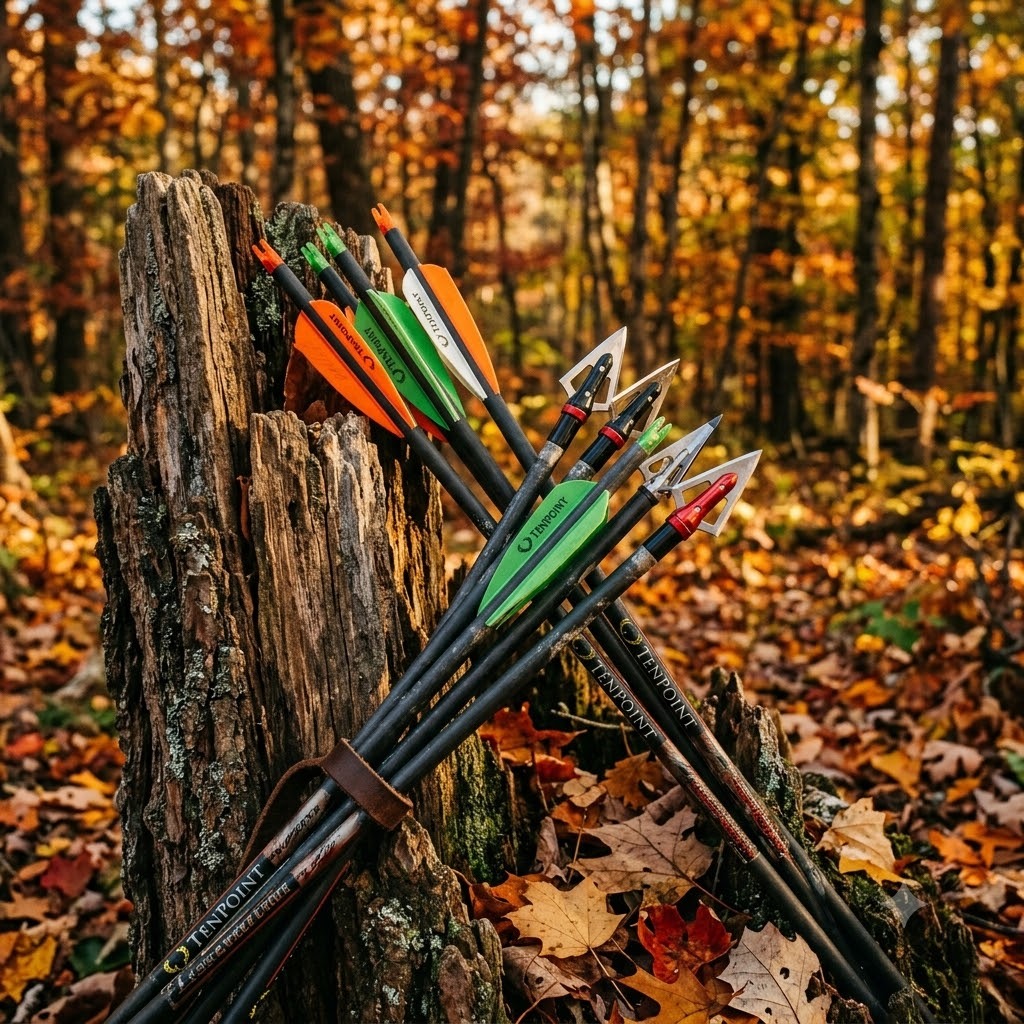
More crossbows are damaged by wrong bolts than by anything else. A bolt is not a short arrow: it's a 16-22 inch shaft whose length, minimum weight and nock style are specified by your crossbow's maker - and firing the wrong nock type (half-moon where a flat or capture nock is required, or vice versa) can drop the string over the bolt and dry-fire the bow into your hands. Get the spec from the manual, buy to it, and inspect carbon shafts before every shot. The bolt is the cheap part of the system; treat it as precisely as the trigger.
⚠️ Crossbow safety and legality. Crossbow rules differ from vertical-bow rules and vary sharply by state and season - some allow them all archery season, some only in firearms seasons or with a disability permit - so confirm current regulations with your wildlife agency; we don't give legal advice. Keep fingers and thumb BELOW the rail at all times (the string will take them off), never dry-fire, follow the maker's minimum bolt weight, de-cock only by the maker's approved method, and never climb into a stand with a cocked, loaded crossbow. Brand-free educational guidance, not a substitute for hands-on instruction.
What it is
The short, stiff projectile a crossbow fires: shaft (usually carbon), fletching, a nock in the maker's specified style (half-moon, flat, capture or lighted), and a screw-in field point or broadhead.
How it shoots
The rail and string do the guiding, so bolt consistency - straightness, weight matching, tight nock fit - translates directly to groups. Under-weight bolts behave like a partial dry-fire and can wreck limbs.
Who it suits
Every crossbow owner - this is the one component you'll buy repeatedly, and the one where 'close enough' causes real damage.
Choosing one
Open the crossbow manual first: it names the length, minimum total weight (bolt + head) and nock type. Buy quality shafts to that spec, matched in weight; 100-125 grain heads are the common range - keep field points and broadheads the same weight.
Setup & practice
Flex-check and eye-check carbon bolts before each session (a cracked carbon shaft can shatter on firing), seat nocks fully, sight in with field points and then confirm broadhead impact - they rarely match exactly.
Common mistakes
Mixing nock types, shooting bolts lighter than the maker's minimum, reusing a bolt that hit something hard without inspection, and hunting with broadheads that were never test-fired.
🏹 Brand-free guidance, not product recommendations. Bows must meet your state's minimum draw weight and archery rules, which vary and change - confirm with your wildlife agency before hunting. Never dry-fire a bow, match arrow spine to your setup, and get a pro-shop fitting. We don't give legal advice.