Compound Crossbow
The dominant modern crossbow: cams and cables multiply energy so it shoots faster from a narrower, more manoeuvrable frame - at the cost of more mechanical complexity and shop-dependent service.
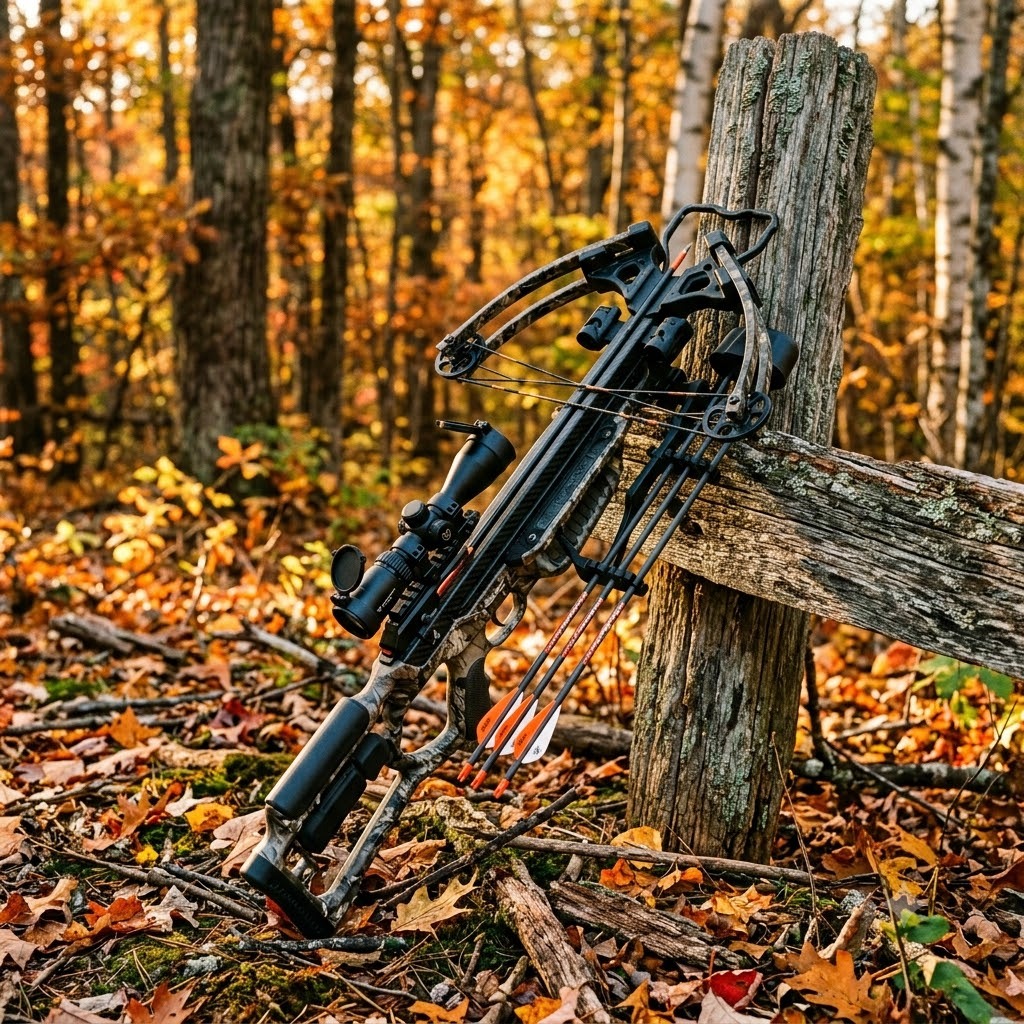
Put cams on a crossbow and everything gets more compact: the limbs shorten, the axle-to-axle width narrows enough to thread through a blind window, and bolt speeds climb. That's why the compound layout dominates the modern crossbow market. The trade is complexity - cables, cams and (usually) a required trip to a shop or a press for string work - and a sharper, louder shot cycle on many models. If speed, flat trajectory and a narrow frame matter most, this is the mainstream answer.
⚠️ Crossbow safety and legality. Crossbow rules differ from vertical-bow rules and vary sharply by state and season - some allow them all archery season, some only in firearms seasons or with a disability permit - so confirm current regulations with your wildlife agency; we don't give legal advice. Keep fingers and thumb BELOW the rail at all times (the string will take them off), never dry-fire, follow the maker's minimum bolt weight, de-cock only by the maker's approved method, and never climb into a stand with a cocked, loaded crossbow. Brand-free educational guidance, not a substitute for hands-on instruction.
What it is
A crossbow using cams and cables (like a compound bow turned sideways) to store more energy per inch of power stroke - narrower and faster than a recurve crossbow.
How it shoots
Fast and flat: the cam system pushes bolt speeds higher for a given draw weight, which shortens flight time and forgives small ranging errors. The mechanism is more complex, and string/cable service usually needs a shop.
Who it suits
Most modern crossbow hunters - especially blind hunters who value the narrow width - and anyone who wants the flattest trajectory their budget allows.
Choosing one
Judge the whole package: cocking mechanism, trigger quality, safety features (anti-dry-fire, finger guards), noise, and warranty service access - not just the speed number on the box.
Setup & practice
Sight in with hunting-weight bolts, confirm broadheads separately, keep the rail lightly lubed and strings waxed per the manual, and inspect cables for fray. Practice de-cocking safely before season, not during it.
Common mistakes
Buying on speed alone, ignoring string/cable wear until it fails, home-servicing a cam system without the tools, and forgetting that faster bolts still drop fast past 40 yards.
🏹 Brand-free guidance, not product recommendations. Bows must meet your state's minimum draw weight and archery rules, which vary and change - confirm with your wildlife agency before hunting. Never dry-fire a bow, match arrow spine to your setup, and get a pro-shop fitting. We don't give legal advice.