Cocking & De-Cocking Devices
Rope cockers halve the effort and centre the string; cranks reduce it to pounds and add controlled de-cocking. Consistent cocking is an accuracy tool, not just a convenience.
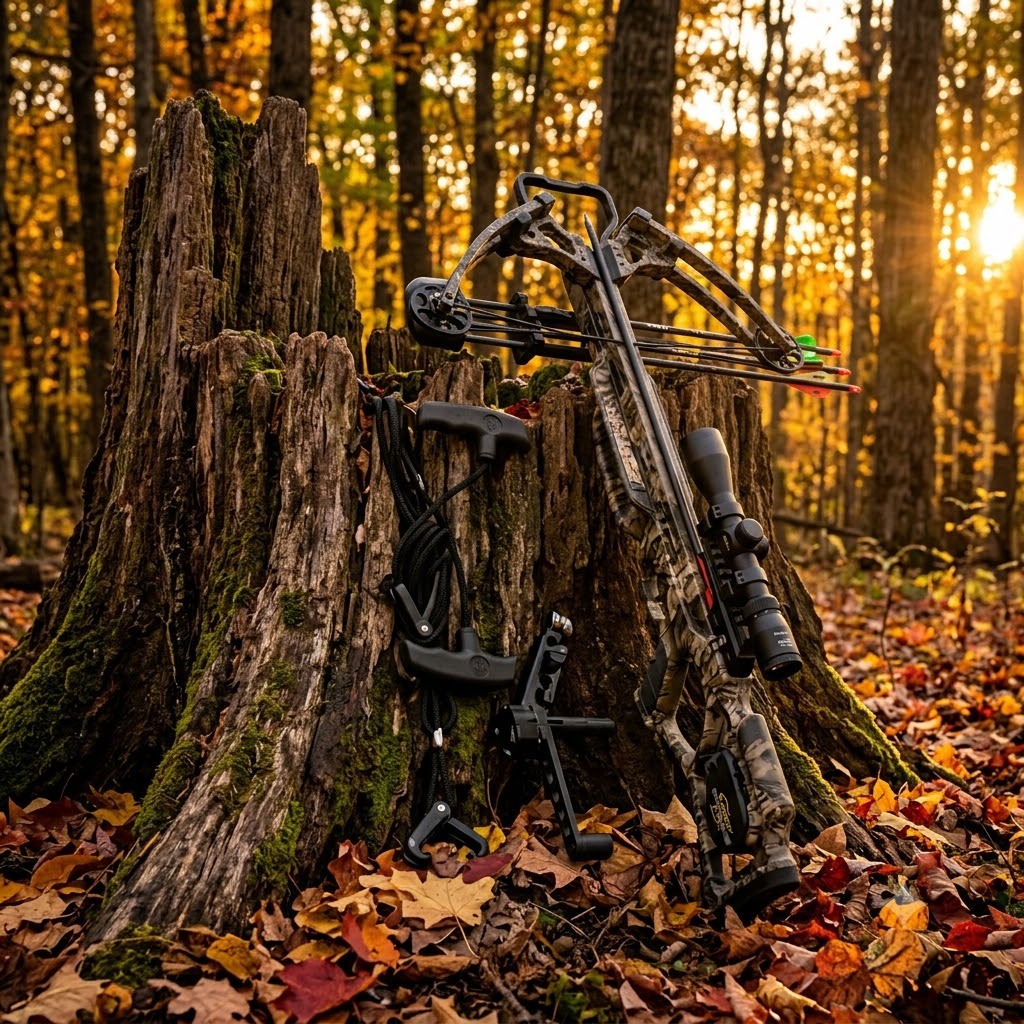
How you cock a crossbow decides both whether you can use it and how well it shoots. Cocking by hand takes the full draw weight and, worse, tends to seat the string slightly off-centre - a built-in accuracy error. A simple rope cocker halves the effort and centres the string every time; a crank (add-on or integrated) reduces the pull to a few pounds, opens crossbows to almost anyone, and on many modern models doubles as the safe way to de-cock at the end of the hunt. This is the least glamorous and most practical purchase in the crossbow world.
⚠️ Crossbow safety and legality. Crossbow rules differ from vertical-bow rules and vary sharply by state and season - some allow them all archery season, some only in firearms seasons or with a disability permit - so confirm current regulations with your wildlife agency; we don't give legal advice. Keep fingers and thumb BELOW the rail at all times (the string will take them off), never dry-fire, follow the maker's minimum bolt weight, de-cock only by the maker's approved method, and never climb into a stand with a cocked, loaded crossbow. Brand-free educational guidance, not a substitute for hands-on instruction.
What it is
Mechanical aids for drawing (and often letting down) a crossbow string: rope cockers with hooks and handles, and geared cranks - add-on or built into the stock - some silent, some with controlled de-cock.
How it shoots
Indirectly but measurably: a string cocked square to the rail fires bolts to the same point; a hand-cocked string seated a few millimetres off-centre strings groups sideways. Consistent cocking is free accuracy.
Who it suits
Everyone hand-cocking today (the rope is cheap and better), and - via cranks - youth, older and smaller-framed hunters for whom draw weight is the barrier to crossbow hunting.
Choosing one
Match the device to your crossbow's stock and string (maker-specific fittings are common), check crank noise if you'll cock in the field, and prefer systems with a controlled de-cock over 'shoot it into the dirt' unloading.
Setup & practice
Practice the full cock-load-unload cycle at home until it's automatic, always confirm the safety engages on cocking, and de-cock by the maker's method - never by hand-riding the string down.
Common mistakes
Hand-cocking unevenly and blaming the scope for wandering groups, cranking with the safety off, leaving a crossbow cocked overnight, and improvised de-cocking (riding the string or firing an unsuitable bolt into the ground).
🏹 Brand-free guidance, not product recommendations. Bows must meet your state's minimum draw weight and archery rules, which vary and change - confirm with your wildlife agency before hunting. Never dry-fire a bow, match arrow spine to your setup, and get a pro-shop fitting. We don't give legal advice.