Gray Wolf
In the states and provinces where populations have recovered and seasons are open, the gray wolf is one of the most challenging and tightly regulated big predators a hunter can pursue.
🗓️ Last reviewed: July 2026
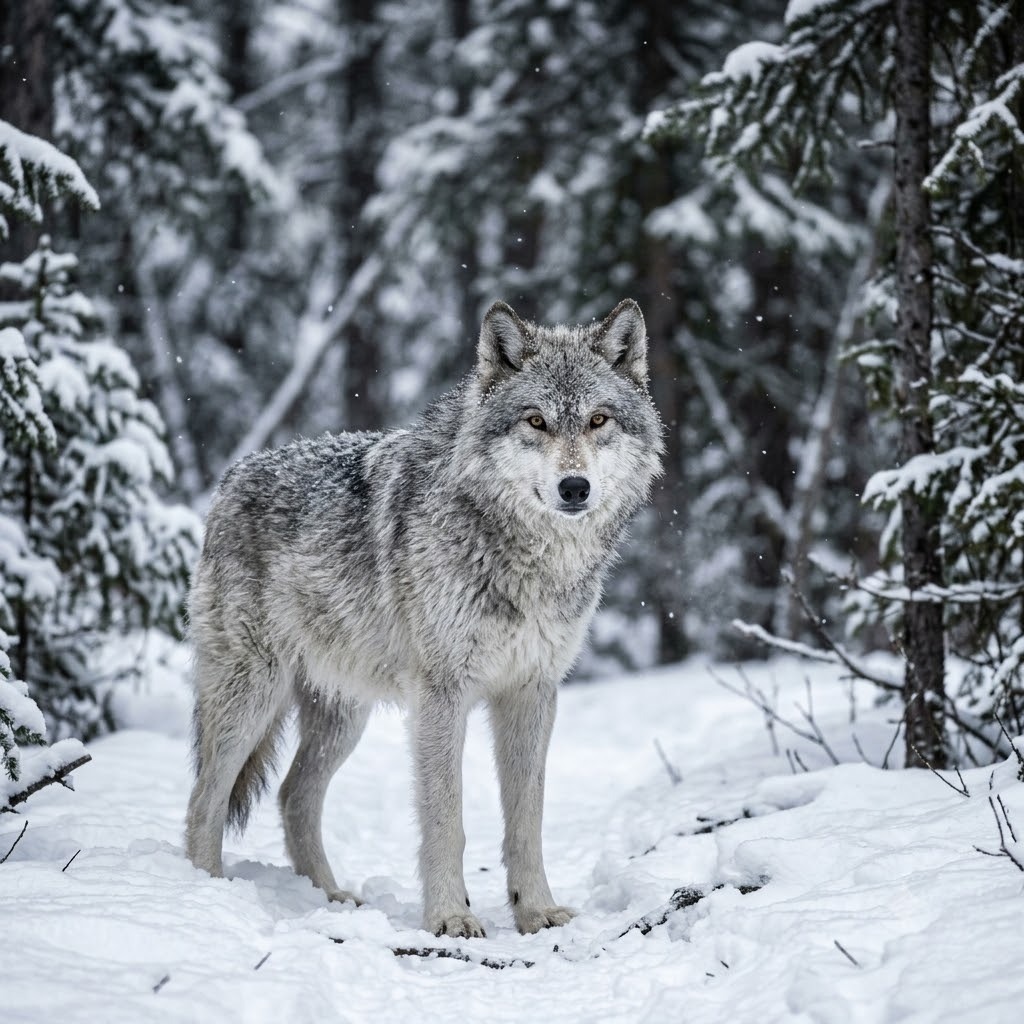
Overview
In the states and provinces where populations have recovered and seasons are open, the gray wolf is one of the most challenging and tightly regulated big predators a hunter can pursue. It demands woodsmanship, patience and a careful reading of ever-changing, region-specific law.
Identification & Appearance
Wolves are far larger than coyotes, standing tall on long legs with a broad head, blocky muzzle and coats ranging from gray to black to near-white. A big male can weigh over 100 pounds - roughly double a large coyote.
Range & Habitat
Huntable populations occur in parts of the northern Rockies, western Great Lakes and Alaska and Canada, in big forest, mountain and tundra country with abundant deer, elk or moose.
Behavior & Sign
Wolves are pack animals that range enormous territories, are extremely wary, and communicate by howling. Sign includes large tracks, scat, kill sites and rendezvous areas.
Hunting Seasons & Timing
Where legal, wolves are hunted in fall and winter seasons, often incidental to other big-game hunts or by dedicated predator hunters using calls in snow.
Hunting Methods
Calling with prey-in-distress and howl sequences, tracking in snow, and glassing big country; in some areas trapping is regulated separately. Success rates are low and effort is high.
Gear & Optics
A flat-shooting centerfire rifle, top-quality optics for spotting at distance, and serious cold-weather gear for long winter days in the backcountry.
Shot Placement & Field Care
Standard broadside heart-lung placement on a species that rarely offers a second chance. Pelts must be handled carefully and, in many areas, presented for mandatory sealing.
Meat & Eating Quality
Wolves are hunted for management and the pelt, not for meat.
Common Mistakes
The most serious mistake is assuming a season is open - wolf status shifts constantly among federal protection, state seasons and court rulings.
Regulations & Conservation
Wolf management is among the most contentious and fast-changing in North America, with status varying by state and year and often subject to quotas, mandatory reporting and sealing. Do NOT rely on this page for legality - always confirm the current status directly with your state or provincial wildlife agency before any wolf hunt. We do not give legal advice.
FAQ
Can I hunt wolves? Only where and when a legal season exists - confirm with the agency, as status changes often.
Wolf or coyote? Wolves are far larger with a broad, blocky head and long legs.