American Badger
The American badger is a powerful, low-slung digging predator of the open prairies and sagebrush, taken by predator and fur hunters for its dense pelt.
🗓️ Last reviewed: July 2026
Overview
The American badger is a powerful, low-slung digging predator of the open prairies and sagebrush, taken by predator and fur hunters for its dense pelt. Tough, solitary and mostly nocturnal, it is a challenging incidental quarry across the western plains.
Identification & Appearance
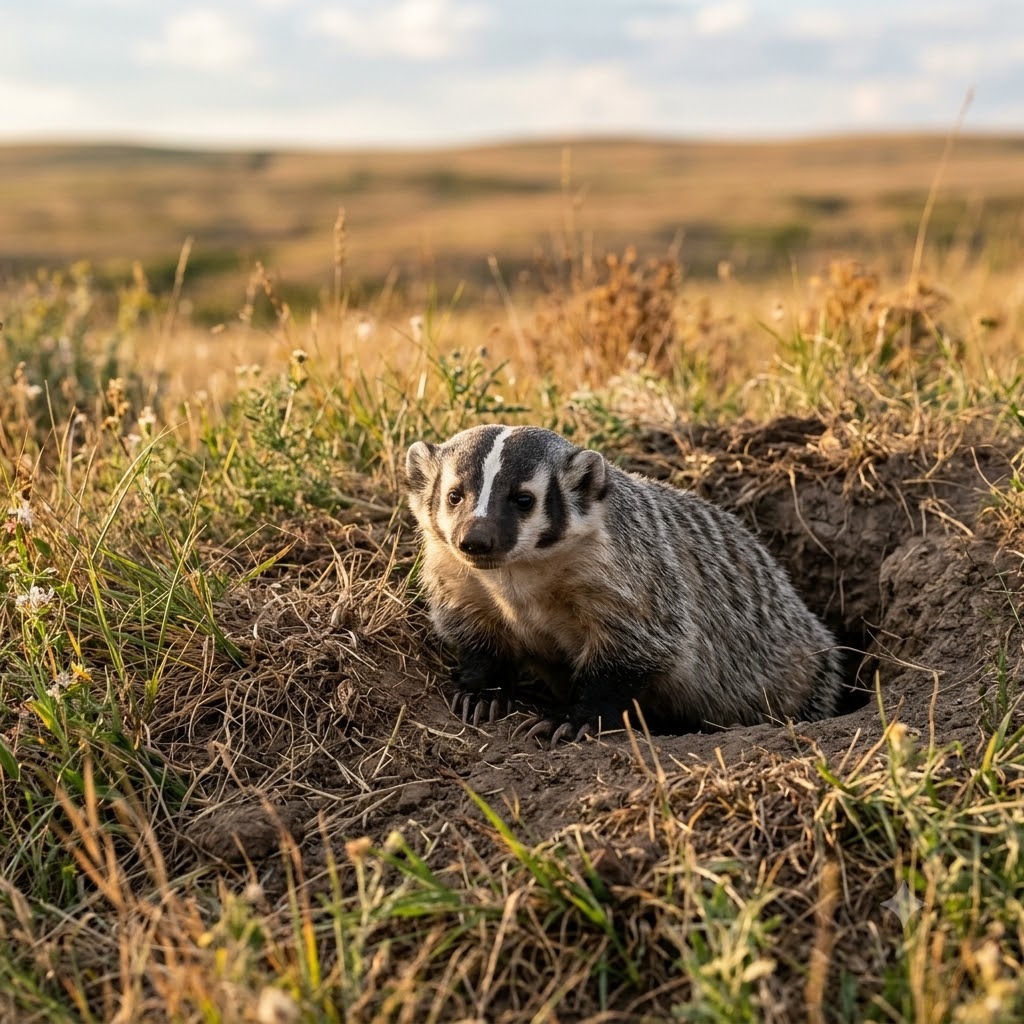
Badgers are broad, flat and grizzled gray with a distinctive white stripe running from the nose over the head, short legs and long front claws built for digging. They are unmistakable low-slung diggers.
Range & Habitat
They occupy open grassland, prairie, sagebrush and farmland across the western and central US, denning in burrows in ground-squirrel and prairie-dog country.
Behavior & Sign
Badgers are solitary, largely nocturnal diggers that hunt burrowing rodents, leaving obvious large, oval den entrances and fresh dirt mounds. They are fierce when cornered.
Hunting Seasons & Timing
Often taken during furbearer and predator seasons in fall and winter when pelts are prime, frequently while calling for coyotes and fox.
Hunting Methods
Predator calling with rodent-in-distress sounds, spot-and-stalk in open rodent country, and shots at badgers working their diggings.
Gear & Optics
A flat-shooting centerfire or rimfire-magnum for open-country shots, and good glass to spot a low, grizzled animal against the ground.
Shot Placement & Field Care
Standard broadside placement; handle the sharp claws and teeth with care. Pelts are skinned and cared for like other furbearers.
Meat & Eating Quality
Badgers are hunted for the pelt and management, not for meat.
Common Mistakes
Approaching a wounded or cornered badger carelessly - they are strong and aggressive.
Regulations & Conservation
Managed as a furbearer with seasons and, in some states, trapping and pelt-tagging rules. Confirm current regulations before hunting. We do not give legal advice.
FAQ
Why hunt badgers? For the dense pelt and as part of predator and furbearer management.
Are they dangerous? Cornered, yes - powerful jaws and claws.