Farming Superworms: A Bigger Protein Feeder Insect
A guide to farming superworms - the large larvae of a darkling beetle, raised like mealworms but bigger and higher in fat, a substantial protein feeder for larger poultry, fish and reptiles.
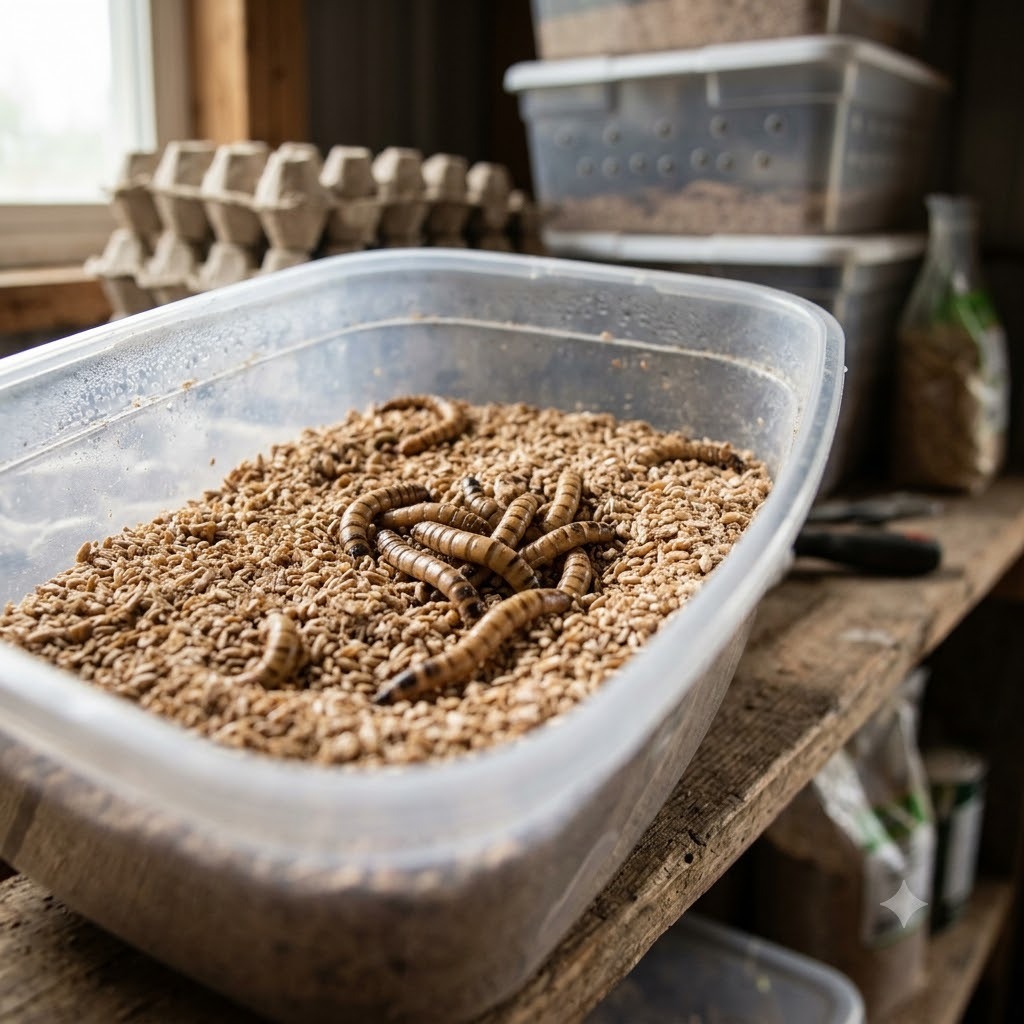
Superworms are the mealworm's bigger cousin - the large larvae of a darkling beetle, farmed in much the same shelf tubs but offering a bigger, higher-fat protein feeder for larger poultry, fish and reptiles. They keep well, grow easily on bran and scraps, and are a favorite feeder insect, with one quirk: to breed them, you must isolate individual worms to trigger pupation.
Is it right for you?
Superworms suit anyone feeding larger poultry, fish or reptiles who wants a bigger, meatier feeder than mealworms, and who is willing to isolate worms to breed more. They are easy to raise otherwise.
Space & Housing
Shelf tubs kept warm and dry, as for mealworms, suit them; breeding needs a set of small individual containers to isolate worms for pupation. They need little room and no light.
Feeding & Daily Care
Feed wheat bran or oats plus carrot or potato for moisture, kept warm; daily care is minimal. To breed, isolate mature worms individually until they pupate, then let the beetles lay.
Getting Started
Start with a batch of superworms in bran; to grow your own supply, isolate some mature worms in small containers to pupate into beetles, then raise the next generation.
Health & Common Problems
Hardy and long-lived as larvae; the main risks are damp (mold, mites) and cold (slow growth). Keep tubs dry and warm. Their reluctance to pupate in a group is the main breeding hurdle.
What You Get
A supply of large, high-protein, high-fat feeder worms for bigger poultry, fish and reptiles - more substantial than mealworms.
Costs & Effort
Low - cheap bran and simple tubs, with a bit more effort than mealworms only if you breed them by isolating worms. Otherwise just as easy.
Common Mistakes
Expecting them to pupate in a group (they won't - isolate them), damp bedding, and cold that stalls growth are the usual mistakes.
FAQ
Superworms or mealworms? Superworms are bigger and fattier, for larger feeders; mealworms are smaller and easier to breed.
Why won't mine pupate? They need to be isolated individually to trigger pupation.