Raising Pheasants: Game Birds for the Table or Release
A guide to raising pheasants - striking game birds kept for meat, hunting-preserve release, or ornamental beauty, needing a large covered flight pen and careful brooding.
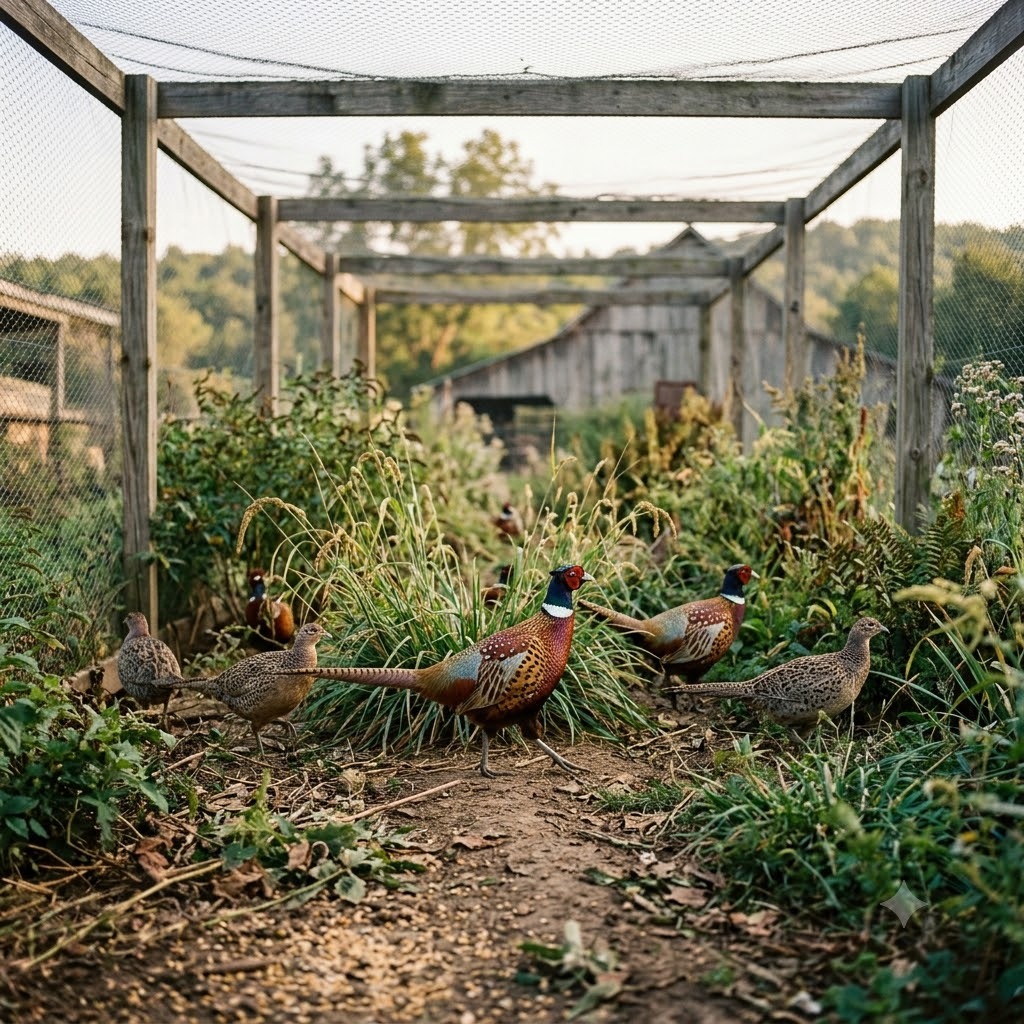
Pheasants are raised on homesteads and small farms for the table, for stocking hunting preserves, or simply for the splendor of the birds themselves. They are more demanding than chickens - flighty, prone to picking when crowded, and needing a large covered flight pen - but rewarding for those who want game birds of their own.
Is it right for you?
Pheasants suit someone with space for a large covered pen who wants game birds for meat, release or ornament, and who can manage flighty, more delicate poultry.
Space & Housing
They need a spacious covered flight pen with cover plants or brush to hide in and reduce stress; they fly powerfully, so the top must be netted or covered.
Feeding & Daily Care
Feed a high-protein game-bird ration, especially when young, plus greens; provide constant water. Give them cover and space to prevent stress and feather-picking.
Getting Started
Order chicks (or eggs to incubate), brood them warm on high-protein feed, and move them to a spacious covered pen with cover as they grow.
Health & Common Problems
They are prone to stress, feather-picking and cannibalism when crowded, and to the usual game-bird diseases; space, cover and cleanliness are the main preventives.
What You Get
Lean, flavorful game meat, birds for release on a preserve, or simply the beauty of a flight pen full of colorful cocks.
Costs & Effort
Moderate to high - a large pen, high-protein feed and more careful management than chickens, but a rewarding specialty.
Common Mistakes
Crowding (leading to picking and cannibalism), no cover to hide in, and an uncovered pen (they fly off) are the classic errors.
FAQ
Harder than chickens? Yes - flightier and more prone to stress and picking.
What are they for? Meat, hunting-preserve release, or ornament.