Raising Marans: The Chocolate-Egg Layer
A guide to Marans - a French dual-purpose breed famous for its very dark, mahogany to chocolate-brown eggs, a hardy, calm bird adding rich color to the basket and meat to the table.
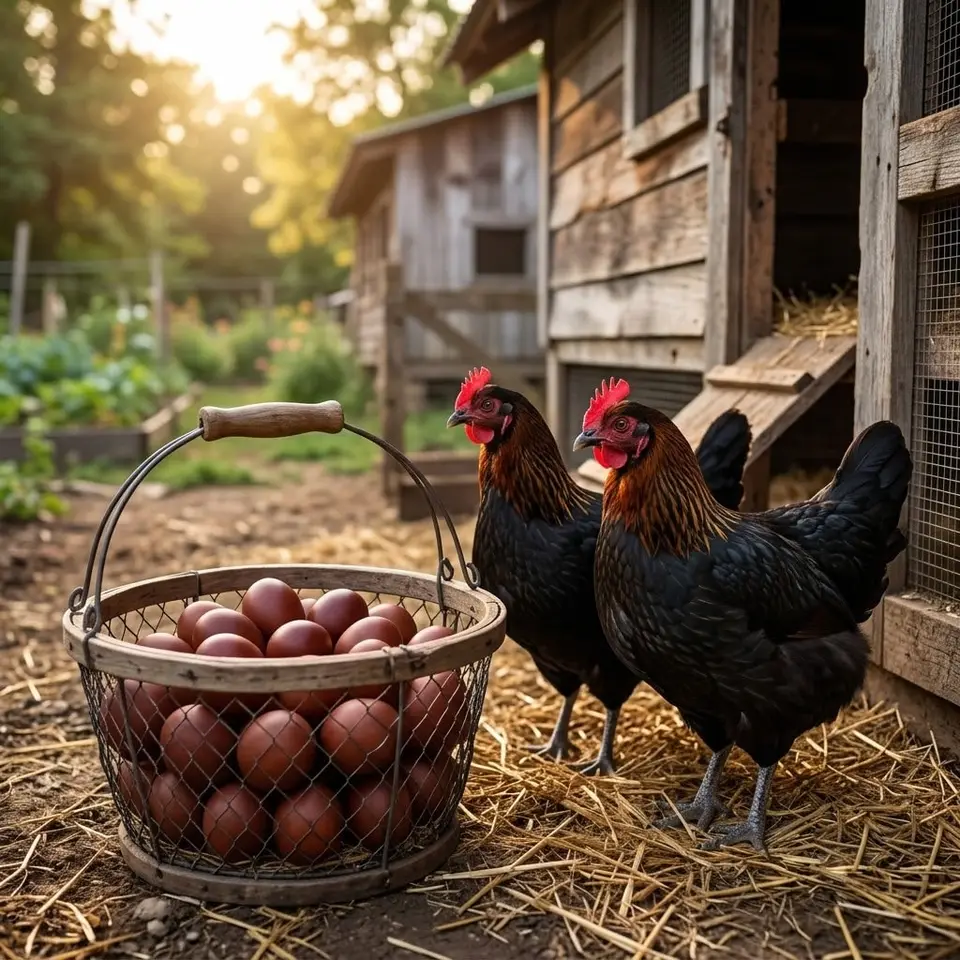
Marans are the breed that lays the showstopper eggs - very dark, mahogany to chocolate-brown eggs that only one other breed, the Penedesenca of Catalonia, matches, prized by everyone who opens the carton. Beyond their remarkable eggs, they are a hardy, calm French dual-purpose breed, the copper-black variety especially handsome, that also grows a good meat carcass. For a striking egg basket and solid all-round production, they are a favorite.
At a glance
| Trait | Details |
|---|---|
| Origin | Marans, Charente-Maritime, south-western France |
| Use | Dual-purpose: meat and eggs |
| Eggs | Dark brown, mahogany to chocolate |
| Weight | Roosters 3.5-4 kg (7.7-8.8 lb), hens 2.5-3 kg (5.5-6.6 lb) |
| Comb | Single |
| Breed standard | Marans-Club de France |
Figures from Wikipedia.
Is it right for you?
Marans suit anyone who wants the novelty and beauty of dark chocolate-brown eggs from a hardy, calm dual-purpose bird. They lay well, if not as heavily as dedicated layers, and grow decent meat.
Space & Housing
A standard coop and run suits them; they forage well and tolerate confinement calmly. Give a few square feet of coop and room to roam, and predator-proof it.
Feeding & Daily Care
Feed a layer or all-flock ration plus scraps and forage, with grit and water; daily care is simple. Good nutrition supports the deep egg color.
Getting Started
Start with a few pullets from good dark-egg lines, provide a secure coop, and expect richly colored eggs by around six months. Egg color varies by line, so choose stock accordingly.
Health & Common Problems
Hardy and calm with few issues; the feather-legged varieties need dry footing to protect their foot feathering. Watch the usual mites, worms and standard ailments.
What You Get
Striking deep chocolate-brown eggs that stand out in any basket, plus a good meat carcass from surplus birds - beauty and production together.
Costs & Effort
Low - hardy, calm and dual-purpose; the main variable is choosing lines that lay the darkest eggs, which is what most keepers want them for.
Where New Keepers Go Wrong
Expecting the darkest color to last all cycle (it fades and returns after a molt), and wet footing for feather-legged lines, are the usual mistakes.
FAQ
Really the darkest eggs? Nearly: their rich mahogany to chocolate-brown eggs are matched by only one other breed, the Penedesenca of Catalonia (Wikipedia).
Why did the color fade? It is deepest early in a cycle and lightens as a hen lays on, returning after a rest.
Kit for keeping poultry
Links go to Amazon or a partner store (such as OpticsPlanet) and may earn us a commission at no extra cost to you. As an Amazon Associate we earn from qualifying purchases. We link gear types, not sponsors' picks: you choose the exact product.