Farming Earthworms: Compost, Castings and Bait
A guide to vermicomposting with earthworms - composting worms farmed in a simple bin that turn scraps into rich castings, the finest natural fertilizer, while multiplying into free bait and poultry treats.
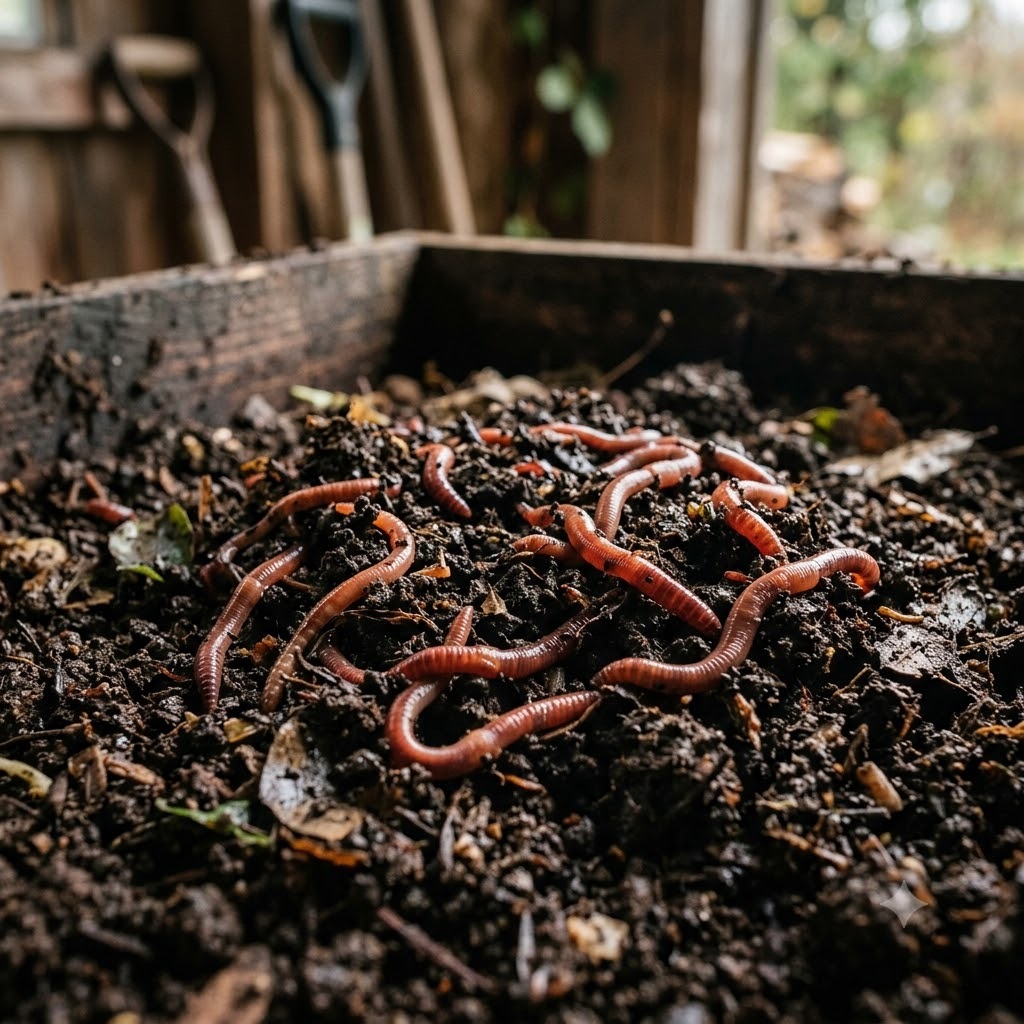
A worm bin is one of the most rewarding small systems on any homestead. Composting worms like red wigglers turn your kitchen scraps into worm castings - a dark, crumbly, nutrient-rich fertilizer prized by gardeners - while multiplying into an endless supply of free fishing bait and a protein treat for the chickens. Quiet, odorless and tiny, it fits under a sink or in a shed.
Is it right for you?
Earthworm farming suits any gardener, angler or poultry keeper who wants premium compost, free bait and protein treats from kitchen scraps, in the smallest of spaces. It is clean, quiet and beginner-proof.
Space & Housing
A simple stacked or single worm bin, kept moist, dark and at room temperature, is all you need; it fits under a sink, in a shed or a shady corner. Use composting worms, not soil earthworms.
Feeding & Daily Care
Feed vegetable scraps, coffee grounds and shredded paper bedding; keep it moist but not wet. Daily care is minimal - add scraps and check moisture. Avoid meat, dairy and citrus.
Getting Started
Start with a bin, moist bedding and a portion of composting worms, add scraps gradually, and let the colony multiply and process waste into castings.
Health & Common Problems
Very forgiving; the main issues are too wet (smelly, anaerobic), too dry, or overfeeding. Keep bedding damp and airy and feed only as fast as they process.
What You Get
Rich worm castings for the garden, a self-renewing supply of fishing bait, protein-treat worms for poultry, and diverted kitchen waste - several returns from one bin.
Costs & Effort
Very low - a bin, some bedding and scraps you already have. Minutes a week for premium fertilizer and free bait.
Common Mistakes
Using soil earthworms instead of composting worms, overfeeding, and letting the bin get too wet or dry are the usual mistakes.
FAQ
Which worms? Composting worms like red wigglers, not garden earthworms.
Does it smell? No - a healthy bin smells earthy; a smell means it is too wet or overfed.