Farming Crickets: Prolific Protein for Feed and Food
A guide to farming crickets - fast-breeding insects raised in bins as high-protein feed for poultry, fish and reptiles, and as human food, prolific and cheap but famously noisy.
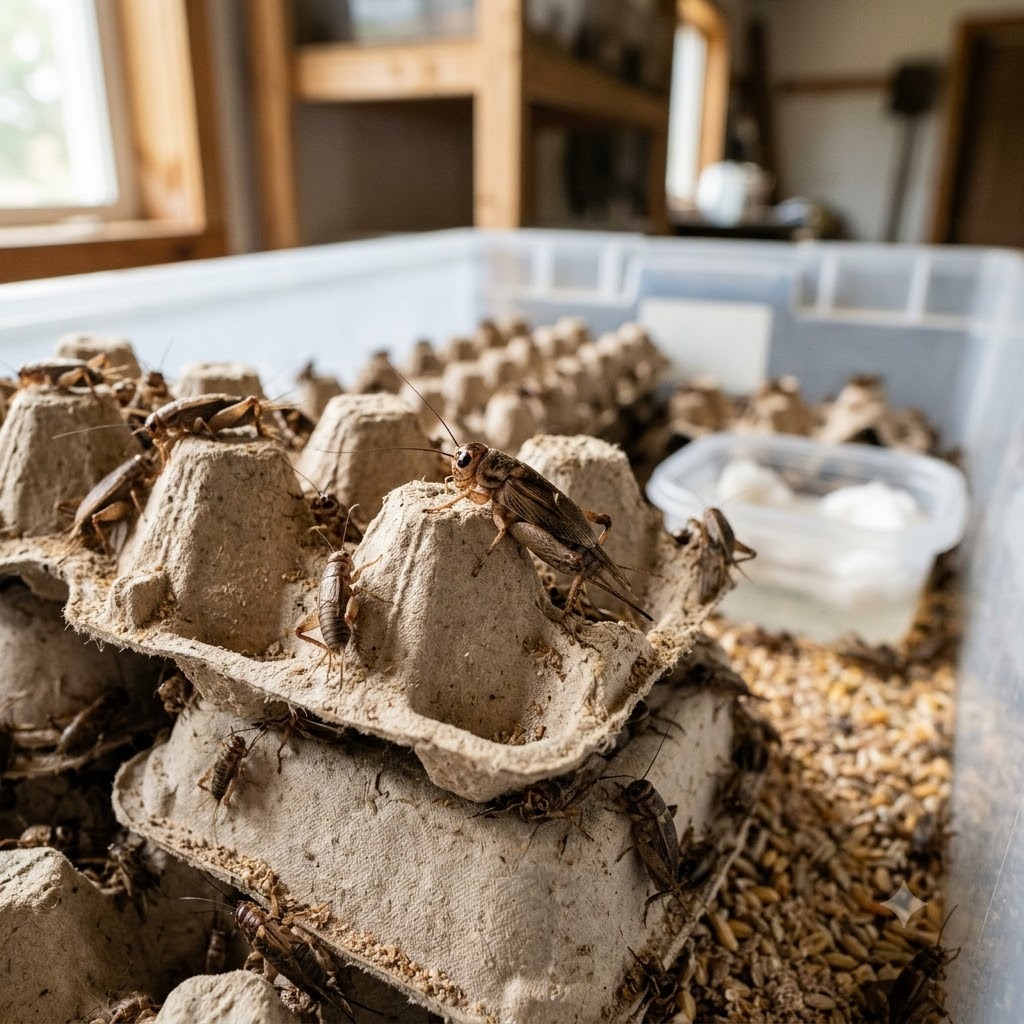
Crickets are a farming staple of the insect world - fast-breeding, cheap to raise, and packed with protein, whether fed to chickens, fish and reptiles or dried and milled for human food. A few bins stacked with egg-carton shelters can produce a steady supply, though the males' loud chirping means most keepers house them well away from the living quarters.
Is it right for you?
Crickets suit anyone wanting a prolific, high-protein feed for poultry, fish or reptiles, or a human food insect, and who can tolerate (or house away) the noise. They are cheap and fast-multiplying.
Space & Housing
Stacked bins or tanks with egg-carton shelters for hiding and surface area, kept warm, work well; a shed or garage suits them better than the house because of the chirping. Keep them escape-proof.
Feeding & Daily Care
Feed a grain-based cricket or chick feed plus vegetable scraps, with a water source they cannot drown in (a damp sponge or gel). Daily care is food, water and warmth; warmth speeds breeding.
Getting Started
Start with a colony and egg-laying substrate (moist soil or coco coir), let the females lay, and incubate the eggs warm to hatch the next generation. Keep it warm for continuous production.
Health & Common Problems
Prone to crashes from damp, poor ventilation and disease if overcrowded or dirty; keep bins clean, warm, ventilated and not too wet. Good hygiene prevents most colony collapses.
What You Get
A prolific, high-protein feed for poultry, fish and reptiles, or a human food insect - a lot of protein from cheap grain and scraps.
Costs & Effort
Low - cheap feed and simple bins, though a bit more management than mealworms to keep the colony healthy. The noise is the main downside.
Common Mistakes
Damp, dirty or crowded bins (colony crashes), poor ventilation, and housing them where the chirping is a nuisance are the usual mistakes.
FAQ
Are they noisy? Yes - males chirp loudly; house them away from living areas.
What eats them? Poultry, fish and reptiles - and increasingly people, dried and milled.