Long-tailed Duck
The long-tailed duck, formerly called the oldsquaw, is a fast, elegant sea duck of northern coasts and a prized sea-duck trophy.
🗓️ Last reviewed: July 2026
Overview
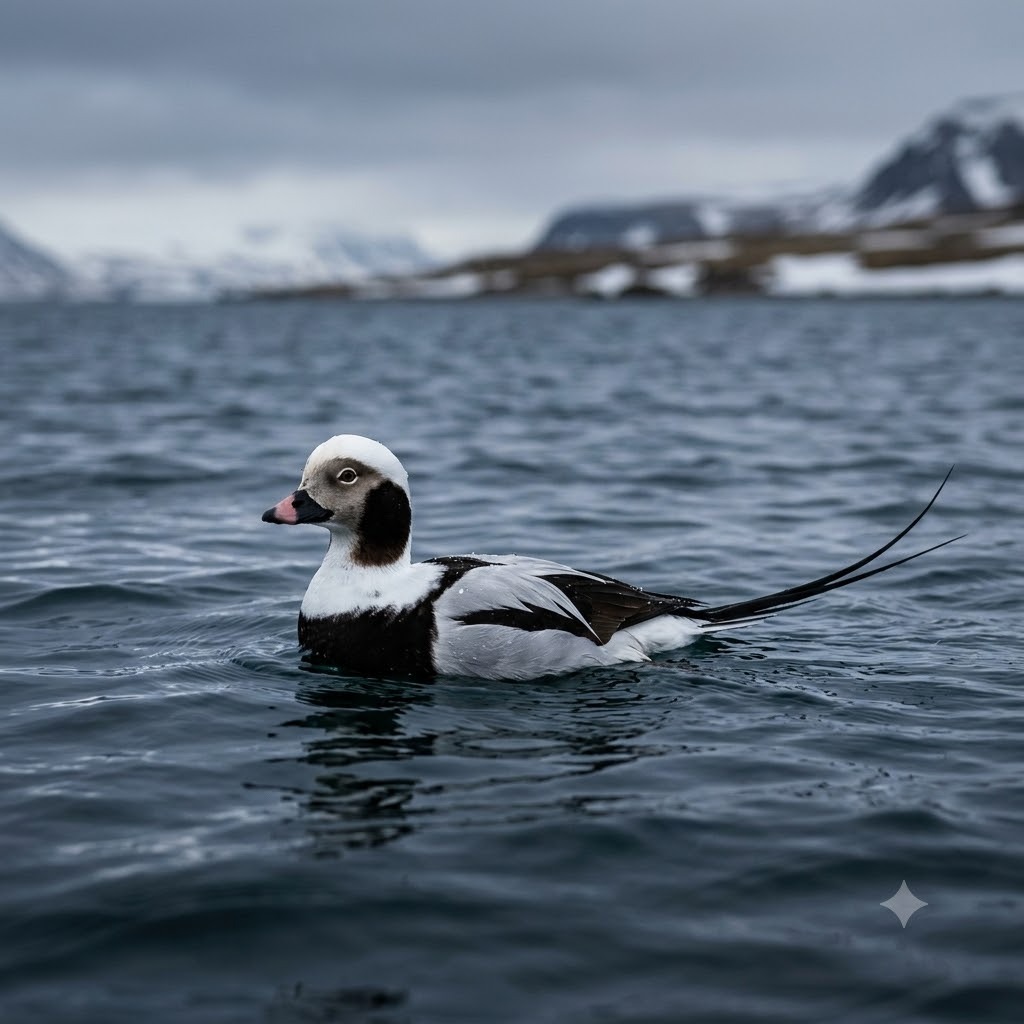
The long-tailed duck, formerly called the oldsquaw, is a fast, elegant sea duck of northern coasts and a prized sea-duck trophy. Drakes carry long pin tails and a shifting seasonal plumage, and they fly in low, twisting flocks that test any shooter.
Identification & Appearance
Winter drakes are boldly pied black and white with a pink-banded bill and two long central tail feathers; hens are duller brown and white. Flight is fast, low and erratic, with birds tipping side to side.
Range & Habitat
They winter on cold northern seas - the Great Lakes, New England and Alaska - diving deep for crustaceans and small shellfish farther offshore than most ducks.
Behavior & Sign
Long-tails raft far out and trade low along the coast in fast, bunched flocks, calling with a distinctive yodel. They decoy to sea-duck spreads but move quickly.
Hunting Seasons & Timing
Hunted in sea-duck seasons of late fall and winter from layout boats in open water.
Hunting Methods
Sea-duck decoy lines off points and open water, hunted from layout boats; fast pass-shooting is common.
Gear & Optics
A 12-gauge with steel #2 to #4, a seaworthy boat and cold-water safety gear. Leading fast, low birds is the shooting challenge.
Shot Placement & Field Care
Lead generously on fast, twisting flocks and recover divers quickly in cold water.
Meat & Eating Quality
Strong and fishy like other sea ducks; usually breasted and cooked boldly.
Common Mistakes
Under-leading fast birds, unsafe open-water conditions, and poor cold-weather preparation.
Regulations & Conservation
Managed under sea-duck seasons and limits. Confirm current regulations and safety before hunting. We do not give legal advice.
FAQ
Why the old name? "Oldsquaw" was retired; long-tailed duck is now standard.
Hard to shoot? Yes - fast, low and erratic in flight.