Willow Ptarmigan
The willow ptarmigan is a hardy northern grouse of the tundra and willow country, and the classic wing-shooting bird of Alaska and the far north.
🗓️ Last reviewed: July 2026
Overview
The willow ptarmigan is a hardy northern grouse of the tundra and willow country, and the classic wing-shooting bird of Alaska and the far north. It turns pure white in winter, holds tight for pointing dogs, and offers wild, remote upland hunting in spectacular country.
Identification & Appearance
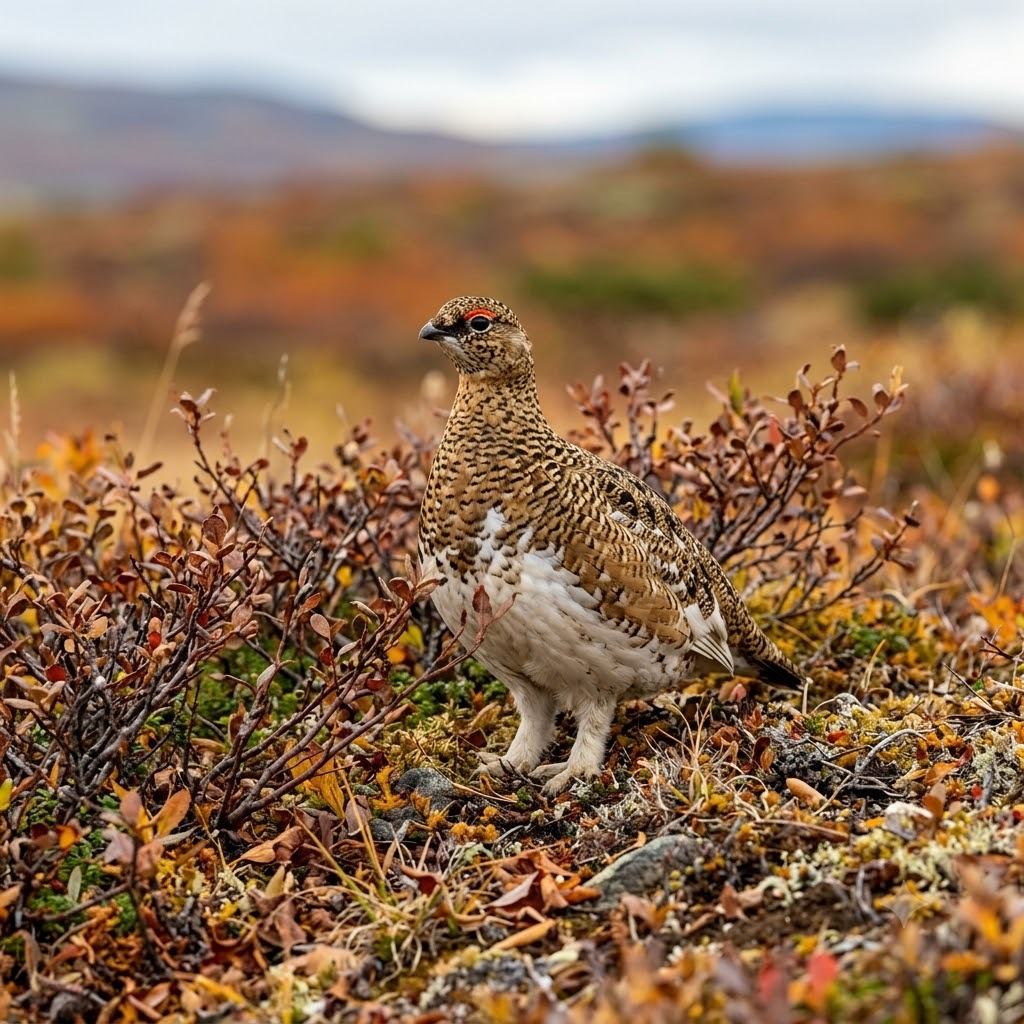
In summer willow ptarmigan are mottled reddish-brown; in winter they are snow-white with a black tail and feathered feet. They are the largest and most widespread ptarmigan.
Range & Habitat
They occupy tundra, willow thickets and subalpine brush across Alaska and northern Canada, moving down into willow-lined drainages in winter.
Behavior & Sign
Ptarmigan gather in coveys and packs, feed on willow and birch buds, and rely on camouflage, sitting tight before flushing. Winter flocks can number in the hundreds.
Hunting Seasons & Timing
Hunted in generous fall and winter upland seasons in the north, from early-season mottled birds to white winter packs.
Hunting Methods
Walk-up hunting over pointing or flushing dogs through willow flats and tundra, and pass-shooting winter flocks moving to feed.
Gear & Optics
A 20 or 12-gauge with #6 to #7.5 shot, warm layers, and good boots for wet tundra. Navigation gear matters in big, featureless country.
Shot Placement & Field Care
Standard upland wing-shooting; cool and breast or pluck the birds. In cold weather they keep well in the field.
Meat & Eating Quality
Ptarmigan are mild, dark-meated and excellent - among the best of the northern grouse for the table.
Common Mistakes
Getting lost in vast terrain, underdressing for sudden weather, and passing up close covey flushes waiting for a better angle.
Regulations & Conservation
Ptarmigan have liberal seasons and limits where they are abundant. Confirm current state and provincial upland regulations before hunting. We do not give legal advice.
FAQ
Do they turn white? Yes - fully white in winter with a black tail.
Do dogs work on them? Yes, they hold well for pointers.