White-tailed Ptarmigan
The white-tailed ptarmigan is the smallest ptarmigan and the only one native to the alpine peaks of the lower 48, living above treeline in the Rockies.
🗓️ Last reviewed: July 2026
Overview
The white-tailed ptarmigan is the smallest ptarmigan and the only one native to the alpine peaks of the lower 48, living above treeline in the Rockies. Hunting it is a high-country adventure for a bird superbly camouflaged in rock and snow.
Identification & Appearance
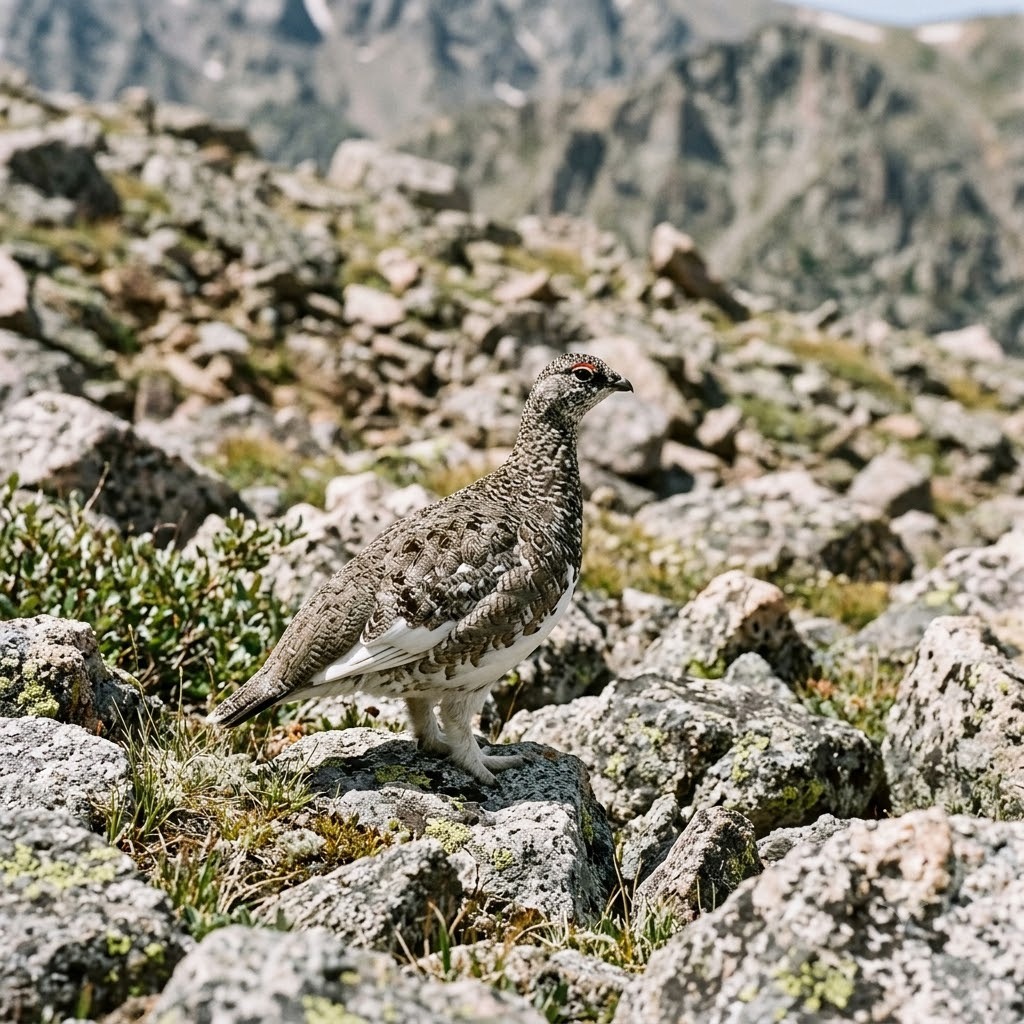
White-tailed ptarmigan are small alpine grouse, mottled gray-brown in summer and pure white in winter, and unlike other ptarmigan they keep an all-white tail in every season. That white tail is the key mark.
Range & Habitat
They live year-round in alpine tundra above treeline in the Rockies and the mountains of the Pacific Northwest and Alaska, among rock, willow and snow.
Behavior & Sign
They sit tight, relying on camouflage, and gather in small groups on high slopes, flushing close when finally pushed. Sign includes tracks and droppings on snow and tundra.
Hunting Seasons & Timing
Hunted in the fall high-country seasons of the alpine states, reached by climbing above treeline before snow closes access.
Hunting Methods
Walk-up hunting on foot across alpine basins and ridges, spotting sitting birds against the rock and snow.
Gear & Optics
A light 20 or 12-gauge with #6 to #7.5, mountain boots and layered clothing for sudden alpine weather.
Shot Placement & Field Care
Standard wing-shooting on close flushes; cool and breast the birds in the cold thin air.
Meat & Eating Quality
Like other ptarmigan, mild and dark-meated - fine eating.
Common Mistakes
Underestimating the altitude and weather, and walking past well-hidden sitting birds.
Regulations & Conservation
Hunted under alpine-state seasons and limits where populations allow. Confirm current regulations before hunting. We do not give legal advice.
FAQ
How is it different from other ptarmigan? It is the smallest, keeps a white tail year-round, and lives on the highest peaks.
Hard hunt? Physically yes - it lives above treeline.