Sitatunga
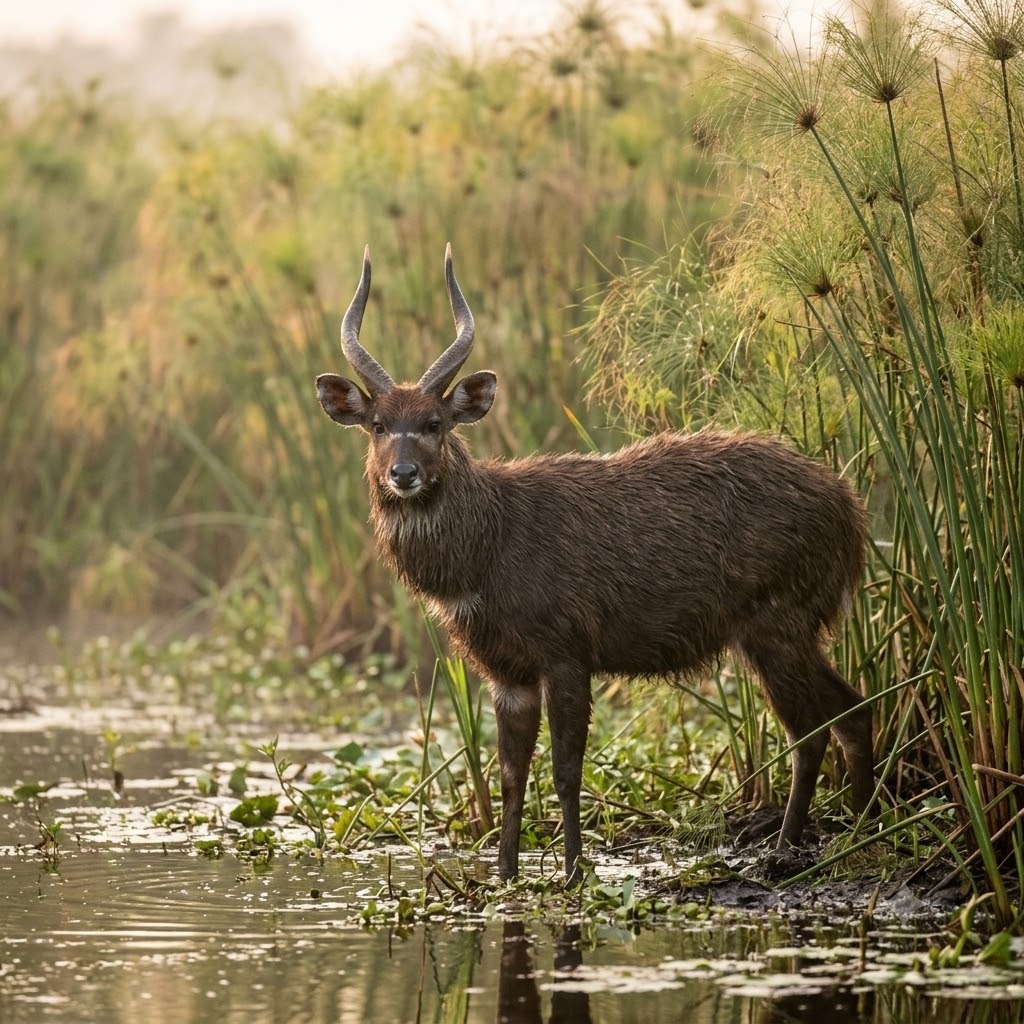
The sitatunga is a secretive, swamp-dwelling spiral-horned antelope, one of the most challenging and specialized plains-game hunts in Africa.
🗓️ Last reviewed: July 2026
Overview
The sitatunga is a secretive, swamp-dwelling spiral-horned antelope, one of the most challenging and specialized plains-game hunts in Africa. Uniquely adapted to marsh and papyrus, it is hunted from machans over swamps and is a coveted, hard-won trophy.
Identification & Appearance
Sitatunga are shaggy and grayish-brown to chocolate, with faint body stripes, a white throat, and greatly elongated, splayed hooves for walking on soft ground; bulls carry gently spiraled horns. Their splayed feet are unique among antelope.
Range & Habitat
They live in permanent swamps, papyrus beds and marshy floodplains across central Africa, spending their lives in dense wetland cover.
Behavior & Sign
Sitatunga are semi-aquatic, moving on hidden trails through the reeds and submerging with only the nostrils showing to hide. Sign includes flattened swamp trails, tracks in mud and feeding platforms.
Hunting Seasons & Timing
Hunted in the dry season when swamps are more accessible, typically at first and last light when bulls move to feed.
Hunting Methods
The classic method is ambush from a raised machan or hide overlooking swamp openings and trails, waiting for a bull to step into a shooting lane.
Gear & Optics
A flat-shooting, accurate rifle in .270 to .30 caliber with a good scope for the often-longer swamp shots. Bright glass matters in dim wetland light.
Shot Placement & Field Care
A precise broadside lung shot when the bull is in the open; recovery in the swamp is difficult, so shot placement and quick action are critical.
Meat & Eating Quality
Sitatunga is edible but hunted almost entirely as a specialized trophy rather than for the table.
Common Mistakes
Poor concealment on the machan, movement that gives away the hunter, and shooting when the bull is not clear of the reeds.
Regulations & Conservation
A specialized, high-value hunt under strict quotas through outfitters holding swamp concessions. Confirm CITES and import rules. This is a reading guide, not legal advice.
FAQ
Why the big feet? Elongated splayed hooves let them walk on soft swamp ground.
How are they hunted? Mostly by ambush from a machan over the marsh.