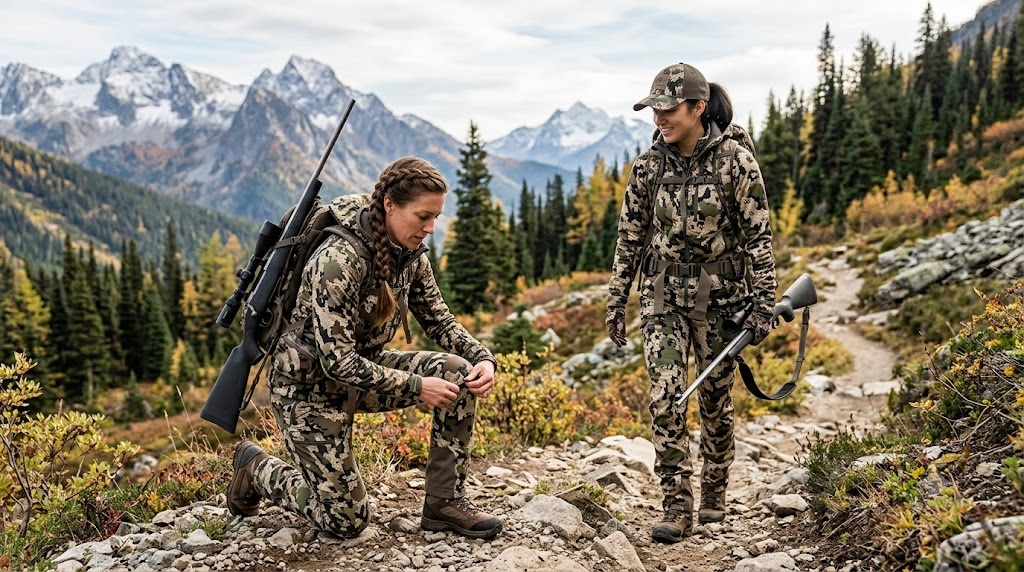
Getting Started: Women Who Hunt
A practical roadmap for women entering hunting: hunter education, finding mentors and women's programs, choosing a first hunt, and earning confidence in the field.
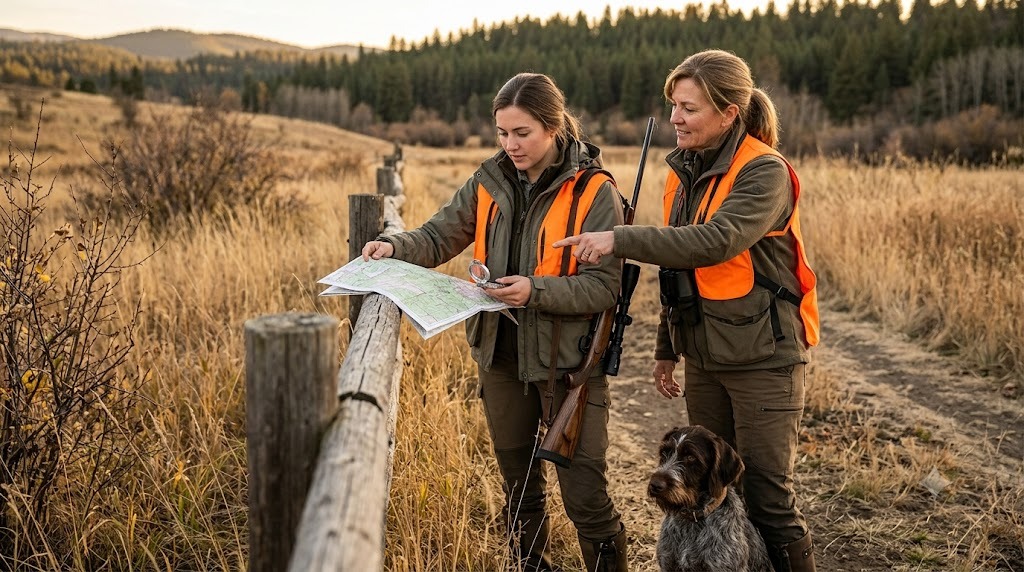
Women are the fastest-growing group in American hunting - roughly 10-12% of hunters today and climbing steadily, up from low single digits a few decades ago - and the path in is the same proven sequence regardless of who walks it: hunter education first, then a mentor or a structured program, then a deliberately easy first hunt. That is the whole roadmap. What differs for women entering the sport is mostly logistics (gear built for men, programs worth knowing about) and a bit of social navigation, and both are very solvable. Here is the practical version, start to finish.
Step 1: Hunter Education
Every state requires hunter education certification for new hunters (age cutoffs vary), and it is genuinely useful, not just a checkbox: firearms safety, shot placement, game identification, regulations, landowner ethics. Format is typically an online course (roughly 4-8 hours, often $20-45) followed in many states by an in-person field day. Your state wildlife agency’s website lists everything; certification transfers between states.
Do this before buying a single piece of gear. It costs almost nothing, commits you to nothing, and by the end you will understand the vocabulary of everything else in this article. Many states also offer an apprentice or mentored hunting license - a try-before-certifying option that lets you hunt under a licensed adult’s direct supervision first. If you are unsure whether hunting is for you at all, that is the lowest-cost way to find out.
Step 2: Find Your People
Hunting is learnable from scratch, but it is learned about five times faster next to someone competent. Three routes, in rough order of accessibility:
- Women-specific programs. These exist, they are excellent, and they fill up. Becoming an Outdoors-Woman (BOW) runs weekend workshops in most states covering shooting, field dressing, tracking, and more, taught in a beginner-first environment. Many state agencies run women’s intro-to-hunting events, mentored women’s hunts, and “learn to hunt” programs that include everything - gear, guidance, and the hunt itself. National organizations aimed at women hunters run local chapters, range days, and group hunts. These programs solve the two biggest beginner problems at once: instruction and community.
- A personal mentor. A parent, friend, coworker, or that one person at the office who disappears every November. Most hunters are genuinely delighted to bring in a newcomer - it is a point of pride. The ask is simple: “I’m certified and serious about learning. Can I tag along this season as an extra set of eyes?” Come with your license sorted, expectations low, and coffee shared, and you will get invited back.
- Ranges, clubs, and conservation groups. Sportsmen’s clubs and conservation organization banquets are dense with people who hunt and mentor. Take a shooting lesson or a ladies’ range night - instructors know everyone, and range time is where your first-season confidence actually comes from anyway.
Step 3: Choose an Easy First Hunt
The biggest beginner mistake is starting with the hardest game. Elk in the backcountry is a terrible first hunt; the learning curve is a wall. Choose forgiving:
- Squirrel and rabbit - the traditional and still-best entry point: long seasons, generous limits, minimal gear (a .22 and boots), constant action, low stakes on every decision, and real skills built - stalking quietly, spotting movement, making clean shots, cleaning game with your own hands. Our small game guides cover species, seasons, and methods.
- Doe hunts / antlerless deer - many states run liberal antlerless seasons precisely to welcome new hunters and manage herds. A whitetail doe from a stationary blind is the classic first big-game hunt: predictable, close-range, and a freezer full of meat at the end. When you are ready, our whitetail section covers stand placement, shot angles, and field dressing step by step.
- Turkey - interactive and thrilling (you call, they answer), sitting still matters more than physical endurance, and gear needs are modest.
- Guided or mentored hunts for pheasant or deer compress years of trial-and-error into one weekend, and women-specific mentored hunts remove every “am I doing this right” anxiety at once.
Whatever you pick: hunt one species your first season. Depth beats variety while you are building fundamentals.
Gear: Start Minimal
Ignore the catalog anxiety. A first season needs: legal weapon appropriate to the game (borrow or buy used - and get fitted; more on that below), boots that fit your feet and are broken in, weather-appropriate layers in drab colors (existing hiking gear mostly works for small game), blaze orange where required, a license, and a knife. That is genuinely it for season one.
The one gear area worth real attention early is fit. Most hunting clothing, packs, and even gun stocks are built around male proportions, and poor fit is not a comfort nuisance - a stock too long changes where you hit; boots that pound your heels end hunts early. Women-specific hunting lines now exist and are worth seeking out; we cover what actually matters in fit in our women’s gear guide. Use the seasonal checklists in tools to avoid both under- and over-buying, and log range sessions with the ballistics and shot-placement references there before opening day.
The Confidence Question, Handled Practically
Walking into a gun counter, a range, or a hunt camp as the only woman in the room is a real experience, so here is the practical read on it - no drama, no pretending.
The great majority of hunters you will meet are welcoming, and the culture’s real currency is competence and safety, not chromosomes. The awkward moments that do happen are mostly predictable and manageable:
- The salesperson who addresses your husband or steers you to the pink compact model unasked. Fix: walk in knowing what you want to try (“I’d like to shoulder a few 20-gauges with a 13-inch length of pull”). Specific vocabulary reorients the conversation instantly. If a shop will not take you seriously, spend your money at one that does - they exist and they want your business.
- Unsolicited over-explaining. Sometimes it is condescension; often it is just how hunters talk to every newcomer. A cheerful “yep, I’m certified, I’ve got that part” and moving on defuses ninety percent of it.
- Proving-ground pressure - the feeling that any miss confirms something. It does not. Every hunter misses; every hunter was new. Safety violations are the only thing anyone truly holds against a newcomer, so let being consistently safe be the reputation you build first. It is entirely in your control, and it earns more respect in hunt camp than any shot.
Three habits do most of the work: know your regulations cold (nothing establishes credibility faster - or matters more legally - than the person who actually read the regs), put in range time before the season (confidence in the field is manufactured at the bench in August), and choose your company (a good mentor or a women’s program beats proving anything to a skeptic; you owe the skeptics nothing).
And know the actual trend line: with women driving much of hunting’s growth, ranges run ladies’ nights, manufacturers build for women because that is where the market is going, and every season more of the camp looks like you. You are not knocking on the door of this sport; you are part of its future - and its conservation funding, since license dollars fund wildlife management.
Your First-Season Plan
- This month: online hunter ed + field day; get your license and read your state regs.
- Next: one shooting lesson, then regular range practice; find a BOW workshop, state women’s hunt, or a personal mentor.
- Pick one forgiving species - squirrel, doe, or turkey - and learn it through our game guides and whitetail resources.
- Gear: boots, layers, blaze orange, borrowed or fitted weapon. Nothing else yet.
- Hunt several short outings rather than one epic. Count every safe, legal day afield as a success - filled tag or not, that is exactly how every hunter you admire started.