Hunting With Kids in Tow
Realistic timing, safety non-negotiables, and gear for kids who tag along on hunts - plus the honest one-paragraph answer on hunting while pregnant.
⚠️ Not medical advice. Pregnancy questions belong with your doctor or midwife - we do not advise. This article covers only the logistics, safety and gear of hunting with children along.
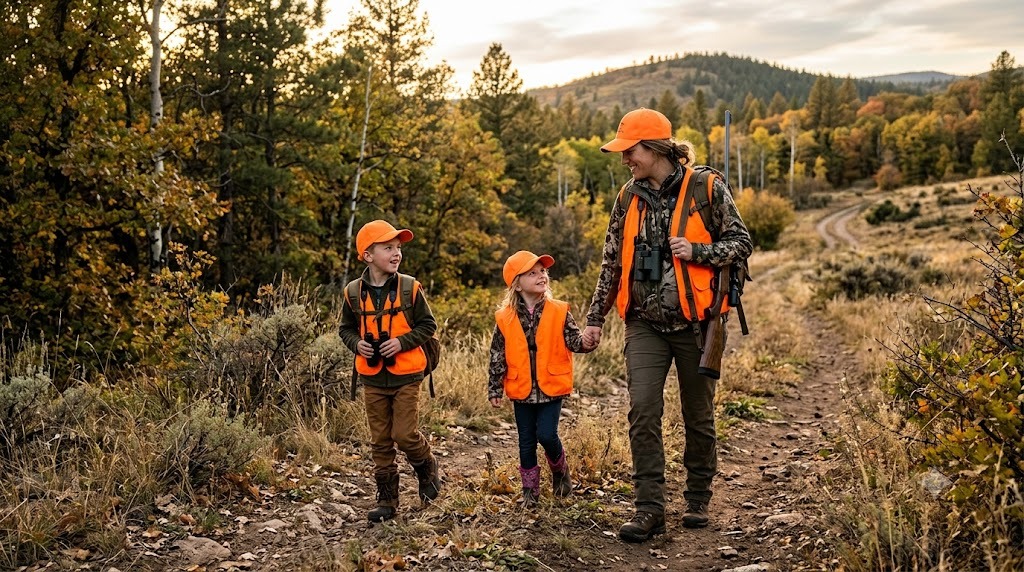
A hunt with a small child along is a different sport with the same clothes: plan for two hours in the field instead of six, a ground blind instead of a treestand, an exit the moment the wheels come off, and success measured by whether the kid wants to come back - not by the tag. Parents who accept that math early raise kids who love hunting; parents who drag a five-year-old through an adult hunt raise kids who remember being cold. Here is the realistic playbook: timing, safety, gear for the small observer, and a short honest word on pregnancy.
Hunting While Pregnant: The Short, Honest Section
We are not going to give advice here, because the only responsible answer is: talk with your doctor. Pregnancy interacts with things hunting involves - recoil, noise exposure, terrain and fall risk, temperature extremes, long drives from remote areas, and simple things like harness fit - in ways that are individual to each pregnancy and each trimester. Plenty of women have hunted while pregnant; what was right for them says nothing about what is right for you. Bring the specifics to your doctor (“stand hunting in November, shotgun, half-mile walk in”) and let that conversation, not a forum or an article, set your limits. That is the entire section, on purpose.
When Kids Can Come Along
Legally, most states allow non-hunting children to accompany a licensed adult at any age, while hunting (carrying or shooting) is governed by state youth and mentored-hunt rules - check your regulations. Practically, the readiness question is about the child, and it looks like this:
- Ages 3-5: short, warm, snack-heavy outings only - think an hour in a comfortable ground blind on a mild afternoon, or “hunting adjacent” walks to check trail cameras. The goal is woods-positive memories, nothing more.
- Ages 6-9: the sweet spot for the observer years. Kids this age can genuinely sit 1.5-3 hours in a blind with management, whisper reliably (after practice), spot deer before you do, and absorb everything - this is where hunters get made.
- Ages 10+: many kids can handle real half-day hunts, help drag and process, and, where state law and your judgment allow, begin mentored hunting themselves. Our game guides and whitetail section cover species-by-species difficulty; squirrels and blind-hunted whitetail does are the classic kid-friendly starts.
Ages are honest generalizations - you know your child’s cold tolerance and sitting endurance. When in doubt, start one level easier than you think.
Realistic Timing
- Cut every duration in half, then be ready to halve it again. A child’s fun-clock runs roughly: first 30 minutes free, second hour purchased with snacks and whispered games, everything after that borrowed at interest. Two hours is a long sit for a 7-year-old. One good hour beats three deteriorating ones.
- Choose kind conditions over prime ones. The 20-degree November dawn is prime time and a terrible kid hunt. A mild October afternoon (deer move before dusk, temperatures are humane) or a sunny late-morning squirrel walk sacrifices some odds and saves the whole enterprise. Afternoon hunts also skip the 4:30 a.m. wake-up, which defeats small children before the truck leaves the driveway.
- Stay close to the exit. Hunt spots within a 10-15 minute walk of the vehicle. When a kid hits the wall - cold, bathroom, meltdown - you want minutes to warmth, not a forced march. The truck itself, running with heat, is a legitimate mid-hunt reset station.
- Declare victory early. Leave while it is still fun. The single best predictor of “can we go again?” is ending on a high note - a deer sighted, hot chocolate opened, out before the shivering starts.
Safety: The Non-Negotiables
- Blaze orange on the child, always - sized for kids, worn even where the law only requires it of hunters. A small person in a brown coat in the woods is invisible; make them the most visible thing in the county. Add orange to the dog too, if one comes.
- Hearing protection is mandatory, not optional. Children’s ears are more vulnerable than adults’, and one unprotected muzzle blast at close range does permanent damage. Use child-sized earmuffs (adult muffs seal poorly on small heads); electronic muffs are worth the money because kids can still hear whispers and stay engaged, and they will actually keep them on. Put them on before the hunt gets live, not when game appears.
- Ground blinds, not treestands. Height plus small bored bodies is a bad equation. A pop-up blind is the family-hunting cheat code anyway - it hides fidgeting and snack unwrapping, blocks wind, and feels like a fort. If an elevated position is unavoidable, it needs full rails and a properly fitted child harness - “sit still up here” is not a safety system.
- The muzzle rule teaching starts now. Even pure observers learn: we never walk in front of the shooter, we stay behind the firing line, we touch nothing without asking. Narrate your own safety habits aloud - unloading at the fence, checking the chamber - because they are recording everything.
- Weather margins shrink. Kids lose heat faster and report it later, either too absorbed or too eager to please. Check hands and cheeks every 30 minutes yourself; do not rely on them to complain. Overpack warmth deliberately.
- Brief the plan: where we walk, where we sit, what we do if separated (hug a tree, blow the whistle - and yes, hang a whistle on every kid).
Gear for the Small Observer
The kid’s kit is short but specific:
- Warmth beyond adult logic: more layers than you would wear, insulated waterproof boots (the number one failure point - cold feet end hunts), warm hat, and mittens over gloves for the youngest. Chemical hand warmers - two for the pockets, two spares - are cheap morale insurance. Cotton next to skin defeats everything; use wool or synthetic base layers even for observers.
- A seat of their own: a foam pad or small folding chair. A child perched on cold ground or a sharp log lasts twenty minutes; a comfortable child lasts two hours.
- Their own binoculars: the single highest-value engagement purchase - a cheap compact pair ($20-40) turns a passenger into a participant. Give them a job: “you watch the left field edge.” Kids with jobs sit longer, and their eyes are often genuinely excellent.
- Silent entertainment, staged: snacks in soft (not crinkly) packaging, a drink, and one quiet fallback for the deep boredom stretch. Whispered games - count the birds, first-to-spot-movement wins - beat electronics, but a dead-quiet backup has saved many a final hour.
- The dignity kit: wipes, tissues, a headlamp of their own (kids love owning a light), and a plan for field bathroom logistics discussed before leaving the truck.
Print-ready packing checklists, sunrise/sunset tables for timing that mild-afternoon window, and sit-length planners live in our tools section.
Making It Take
The long game is simple: let the child’s curiosity set the curriculum. If they are fascinated by tracks, spend the hour on tracks. If a downed deer prompts big questions, answer them honestly and matter-of-factly - kids handle the reality of where meat comes from better than adults expect, especially when they helped, and the venison chili they “hunted” tastes like pride. Give jobs at every stage: carrying the rangefinder, holding the flashlight during field dressing, choosing the stand from two options. And when they say they are done - for the day or for the season - believe them cheerfully. Every pushed kid is a future non-hunter; every kid who begged to come back is a hunting partner for the next forty years.
The Short Version
- Pregnancy: one answer only - your doctor, with the specifics. No exceptions here.
- Halve the hunt: 1-3 hours max by age, mild afternoons over prime dawns, always near the truck, leave on a high note.
- Non-negotiables: kid-sized blaze orange, child earmuffs on before any shooting, ground blinds over height, whistle and separation plan.
- Kit the kid: layers past adult logic, insulated boots, own seat, own binoculars, silent snacks, hand warmers.
- Score the hunt by one metric: do they want to come back?